what is tradoorby Fedha Intern
What is Tradoor? Understanding the NDMM DeFi Exchange
22 min read25 April 202622 reads
Last updated: March 2026
What is Tradoor? Understanding the NDMM DeFi Exchange
So, what's the buzz about Tradoor? Well, it's a decentralized finance (DeFi) derivatives exchange built right on the BNB Chain ecosystem. It's built to give us advanced trading options for crypto assets. Here's the cool part: Tradoor's got this unique Non-Dilutive Market Maker (NDMM) model and a "scientific pricing" mechanism. The goal? Deep liquidity and fair prices for derivative contracts without constantly printing new tokens and diluting our holdings. Now, Tradoor has been making waves lately, partly because of its innovative ideas, but also because of some crazy market volatility – yeah, a sharp price drop happened. But even with that, it's pushing boundaries in decentralized derivatives, a space that's always changing.
What is Tradoor?
Picture this: you want to dabble in some complex financial instruments, maybe futures or options, but you want to do it all on the blockchain – decentralized, transparent, no middlemen. That's exactly what Tradoor's trying to make happen! It's a spot where you can bet on where crypto prices are headed, without actually buying or holding the crypto itself. That, my friend, is the essence of derivatives trading.
At its core, Tradoor is a decentralized derivatives exchange (DEX). Now, unlike our usual centralized exchanges (CEXs) like Binance or your exchange, where some company holds your funds and runs the show, a DEX lets you trade straight from your own crypto wallet. You keep full control of your assets – that's a big deal! If you're new to DEXs, our guide on What is a DEX? A Beginner's Guide to Decentralized Exchanges can give you a comprehensive introduction.
So, what makes Tradoor different, what's its secret sauce? It's all about how they do market making and pricing:
- Non-Dilutive Market Maker (NDMM): This NDMM? It's Tradoor's own special way of making sure there's enough liquidity. Most DEXs we know use Automated Market Makers (AMMs). LPs (liquidity providers) chuck in token pairs, earn fees, but sometimes face "impermanent loss" or deal with constant token emissions that just dilute the token's value. Not ideal, in my opinion. Tradoor's NDMM, though, wants to build a more sustainable liquidity pool by cutting down on constant token minting. The idea is to protect our $TRDOOR token from getting diluted by endless new supply.
- Scientific Pricing: They're talking "scientific pricing" – using fancy algorithms and real-time data to make sure derivative contracts are priced super accurately and fairly. This is crucial, especially for us traders. Seriously, in derivatives, even tiny price differences can mean big arbitrage profits for some, or big losses for us.
- BNB Chain Ecosystem: Being on the BNB Chain is a smart move. It's popular, super fast, and has way lower fees than Ethereum. That's a plus, especially for us in India, where every rupee saved on fees counts! It means Tradoor could be way more accessible and cheaper for us, particularly if you're a frequent derivatives trader – those transaction costs can really pile up, you know?
- The $TRDOOR Token: And then there's the heart of it all: the $TRDOOR token. It's not just some random coin; it's central to the platform. You'll often find it used for these things:
- Governance: Holding $TRDOOR means you get a say! You can vote on big decisions about the platform's future – what features to add, how things should run.
- Staking: You might be able to stake your $TRDOOR to earn rewards, maybe even a slice of the platform's trading fees. Passive income, anyone?
- Fee Discounts: And here's a neat perk: holding or staking $TRDOOR could get you discounts on trading fees. Who doesn't love a good discount?
Basically, Tradoor is trying to bring the kind of sophisticated derivatives trading you'd see in big institutions, but to our decentralized world. Their focus is on sustainable liquidity and fair prices, which sounds good on paper.
Why is Tradoor Trending?
So, why is everyone suddenly talking about Tradoor? Why is it "trending" on CoinGecko? Well, it's a mix of its innovative claims and, funnily enough, its crazy price volatility. Yeah, the crypto world is weird like that.
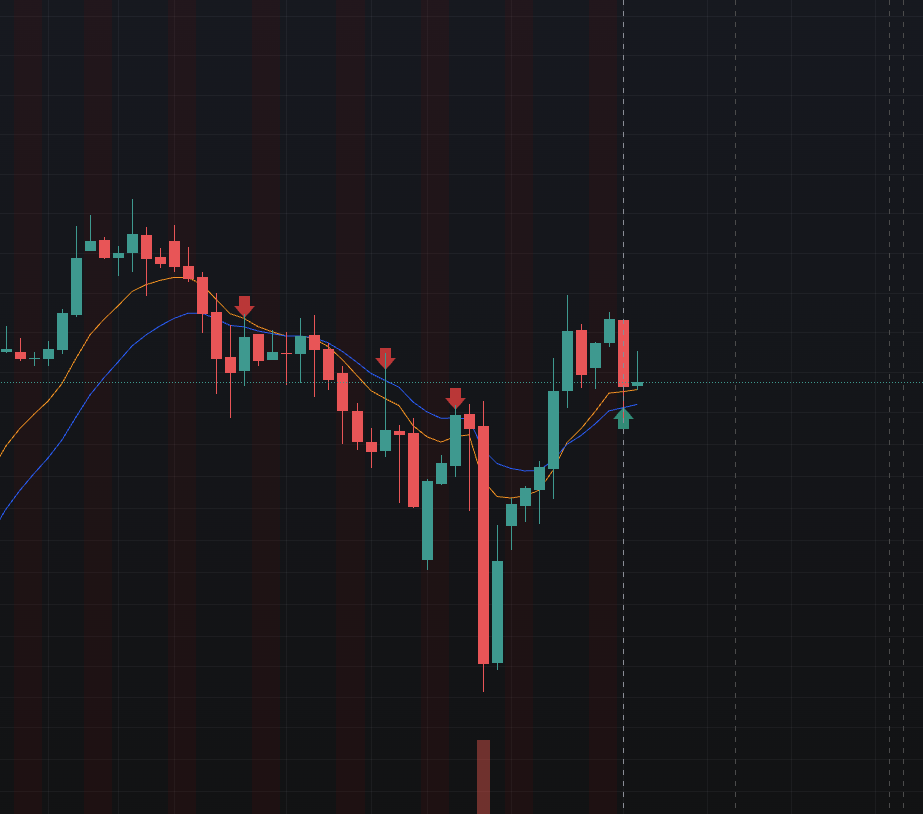
Here's the main reason, in my opinion: that absolutely dramatic price movement. We're talking a staggering 86.7% drop in just 24 hours! Now, a crash like that? It's alarming, no doubt. But it always sparks massive curiosity and gets everyone searching for answers. Here's why:
- "What just happened?" Curiosity: When a shiny new project, especially one with big promises, suddenly crashes hard, everyone wants to know "What in the world just happened?" Was it a flaw in the design? A market-wide dip? Or just the wild, wild west nature of new, low-liquidity tokens?
- Potential for "Bounce Back" Speculation: Here's the thing about crypto: it's highly speculative. Some traders see huge drops as a chance to "buy the dip," hoping for a quick bounce back. Most beginners miss this nuance – it's super risky! This "buy the dip" mindset can really drive searches and trading volume, even if, let me tell you, it's incredibly risky. This is a classic example of Cryptocurrency Market Volatility: Harnessing Price Fluctuations for Trading Opportunities.
- FOMO (Fear Of Missing Out) and FUD (Fear, Uncertainty, Doubt): New projects? They always generate tons of hype, leading to serious FOMO among early birds. Then a crash hits, and FUD (Fear, Uncertainty, Doubt) spreads like wildfire. But guess what? A different kind of FOMO kicks in too – the fear of missing out on a potential recovery if the project actually has strong fundamentals. It's a mental game, really. For retail traders, this often leads to impulsive decisions, as discussed in From FOMO to Framework: A Retail Trader’s Survival Journey in Crypto : Phase 3.
- Innovation Hype: Putting aside the price drama for a moment, Tradoor's claims about its NDMM and scientific pricing model are genuinely innovative for DeFi. That's what initially caught my eye. A promise of a more efficient, sustainable decentralized derivatives platform? That's going to grab the attention of crypto enthusiasts and developers hunting for the "next big thing," no doubt.
- BNB Chain Popularity: Plus, being built on the BNB Chain helps a lot. It has a huge user base and a super active DeFi ecosystem, so new projects there naturally get a lot of eyeballs. It's just how it works: popular chains mean quick traction for new projects.
Here's what matters for us Indian beginners: extreme volatility, especially with new projects, is a double-edged sword. Sure, you can see rapid gains, but you can also lose your shirt just as fast. It's a brutal truth. A project crashing nearly 90% in a day? That tells you everything about the crazy speculative nature and the risks involved. Be careful, my friends.
How Tradoor Works: NDMM and Scientific Pricing
Alright, if you really want to get Tradoor, we need to dig into its engine room: the Non-Dilutive Market Maker (NDMM) and its "scientific pricing" method. These are the technical foundations they're banking on to stand out in the crowded DeFi space.
Understanding NDMM (Non-Dilutive Market Maker)
To appreciate Tradoor's NDMM, let's first briefly understand the prevailing model in many DeFi exchanges: the Automated Market Maker (AMM).
Traditional AMM (Simplified): In an AMM, liquidity providers (LPs) put two different tokens into a pool – think BNB and $TRDOOR, for example. Someone wants to trade? They swap tokens directly with this pool. The price is set by a simple math formula, like x*y=k. And LPs get a cut of the trading fees. However, AMMs come with their own set of problems:
- Impermanent Loss: LPs can actually lose money compared to just holding their assets, especially when prices swing wildly. It's a common headache.
- Dilution from Emissions: Some AMM-based DEXs constantly mint new governance tokens to attract LPs. This can create selling pressure and dilute the token's value over time. Nobody wants their holdings to get diluted, right?
Tradoor's NDMM (Non-Dilutive Market Maker): Now, Tradoor's Non-Dilutive Market Maker (NDMM) is their answer to these problems. Look, the exact tech behind it can get pretty complex, but the main goal is simple: provide deep liquidity for derivatives without constantly printing new tokens and diluting what's already out there.
Think of it like this: instead of just endlessly minting new $TRDOOR tokens to pay LPs (which, let's be honest, just floods the market and can drop the price), the NDMM might use smarter ways to attract liquidity. Like these:
- Fee Redistribution: Maybe a bigger chunk of the trading fees goes straight to LPs. That's a direct incentive.
- Protocol-Owned Liquidity (POL): The protocol itself might own a good chunk of the liquidity. This means less reliance on us external LPs and less need for dilution.
- Dynamic Fee Structures: Fees could adjust based on market conditions, attracting liquidity when it's needed without over-incentivizing with new tokens. Smart, right?
The "non-dilutive" part? That's the real game-changer here. It hints at a more sustainable tokenomics model where your $TRDOOR isn't constantly losing value because of new supply. For long-term holders like me, that's definitely appealing. For a deeper dive into tokenomics, refer to our guide on Tokenomics 101: Supply, Emissions, Unlocks.
Scientific Pricing Model
Derivatives trading, let me tell you, is inherently complex. The price of a futures contract or an option isn't just "what Bitcoin is trading at right now." Oh no, it's way more than that. It factors in things like how much time is left on the contract, how volatile the asset is, interest rates, and even where people think the price will go in the future. It's a lot to consider!
Tradoor's scientific pricing model is trying to bring that institutional-level accuracy to our decentralized derivatives world. Forget simple AMM formulas; this model probably uses:
- Real-time Oracle Data: Reliable external sources (oracles) giving us super accurate, up-to-the-minute price data for the underlying assets. No garbage in, no garbage out!
- Algorithmic Calculations: Sophisticated algorithms, much like the big players in traditional finance use, to calculate fair values for derivative contracts. They might use things like implied volatility, Black-Scholes models (for options), or other complex financial wizardry.
- Risk Management Parameters: The pricing model likely includes ways to manage risk for the liquidity providers and the protocol itself. This helps keep the whole system stable, even when the market goes completely bonkers.
The whole point of this "scientific pricing" is to keep Tradoor's prices super close to what's happening in the wider market. This makes it tough for arbitrageurs to exploit tiny price gaps and ensures we traders get fair execution. That builds trust, you know? It's all about keeping things stable and building trust in the platform.
The Role of the $TRDOOR Token
Like I said before, $TRDOOR isn't just something you speculate on. It's the utility and governance token, the very backbone of the Tradoor ecosystem.
- Governance: Holding $TRDOOR gives you power! You get to vote on proposals that literally shape the platform's future. We're talking changes to trading fees, adding new derivative pairs, or tweaking how the protocol works. This decentralized governance? It's a core idea of Web3, my friend.
- Staking: You can often stake your $TRDOOR tokens to help secure the network or provide liquidity. And for that, you earn a cut of the platform's revenue, like trading fees. It's a nice way to earn some passive income and show you're in it for the long haul.
- Fee Reductions: Active traders, listen up! You might get discounts on trading fees if you hold or stake a certain amount of $TRDOOR. That makes trading cheaper and more attractive.
Trust me, understanding these mechanisms is absolutely crucial if you're thinking about getting involved with Tradoor. They directly affect the token's value and whether this platform will actually last in the long run. For a general overview of derivatives, you can check out Derivatives 101: Perps, Funding, Liquidations.
Tradoor Price and Market Data
The crypto market? It's infamous for being a roller coaster, and Tradoor is a perfect example of that wild ride. That recent 86.7% drop in just 24 hours? It really screams out the extreme risks involved with new, innovative, and often less liquid crypto projects. This isn't for the faint of heart, believe me. These kinds of dramatic price swings are pretty common here, especially for tokens that just launched or have a small market cap. It's the nature of the beast.
When you're checking out any crypto asset, Tradoor included, you absolutely have to look at more than just the price. You need to consider several key metrics.
Real-time data changes every minute, of course, but here's an example of what kind of market data I'd look for if I were analyzing $TRDOOR. Just a heads-up: these values in the table are fictional and purely for example, okay? Real-time data changes literally every second. Always, always check live sources like CoinGecko or CoinMarketCap for the latest info. Don't make decisions based on this example, please!
Illustrative Tradoor Market Data (Fictional Example - Not Real-time)
| Metric | Value (Example) | Explanation Tradoor is a decentralized finance (DeFi) derivatives exchange built on the BNB Chain, distinguishing itself with a Non-Dilutive Market Maker (NDMM) model and a scientific pricing mechanism. It enables users to trade perpetual futures and other derivatives on various crypto assets directly from their self-custodial wallets, aiming to provide deep liquidity and fair prices without the constant token inflation seen in some traditional AMM designs. This platform is designed for individuals seeking advanced trading strategies within a decentralized ecosystem.
What is Tradoor?
For Indian crypto beginners, imagine you want to dabble in some complex financial instruments, maybe futures or options, but you want to do it all on the blockchain – decentralized, transparent, no middlemen. That's exactly what Tradoor's trying to make happen! It's a spot where you can bet on where crypto prices are headed, without actually buying or holding the crypto itself. That, my friend, is the essence of derivatives trading.
At its core, Tradoor is a decentralized derivatives exchange (DEX). Now, unlike our usual centralized exchanges (CEXs) like Binance or your exchange, where some company holds your funds and runs the show, a DEX lets you trade straight from your own crypto wallet. You keep full control of your assets – that's a big deal! If you're new to DEXs, our guide on What is a DEX? A Beginner's Guide to Decentralized Exchanges can give you a comprehensive introduction.
So, what makes Tradoor different, what's its secret sauce? It's all about how they do market making and pricing:
- Non-Dilutive Market Maker (NDMM): This NDMM? It's Tradoor's own special way of making sure there's enough liquidity. Most DEXs we know use Automated Market Makers (AMMs). LPs (liquidity providers) chuck in token pairs, earn fees, but sometimes face "impermanent loss" or deal with constant token emissions that just dilute the token's value. Not ideal, in my opinion. Tradoor's NDMM, though, wants to build a more sustainable liquidity pool by cutting down on constant token minting. The idea is to protect our $TRDOOR token from getting diluted by endless new supply.
- Scientific Pricing: They're talking "scientific pricing" – using fancy algorithms and real-time data to make sure derivative contracts are priced super accurately and fairly. This is crucial, especially for us traders. Seriously, in derivatives, even tiny price differences can mean big arbitrage profits for some, or big losses for us.
- BNB Chain Ecosystem: Being on the BNB Chain is a smart move. It's popular, super fast, and has way lower fees than Ethereum. That's a plus, especially for us in India, where every rupee saved on fees counts! It means Tradoor could be way more accessible and cheaper for us, particularly if you're a frequent derivatives trader – those transaction costs can really pile up, you know?
- The $TRDOOR Token: And then there's the heart of it all: the $TRDOOR token. It's not just some random coin; it's central to the platform. You'll often find it used for these things:
- Governance: Holding $TRDOOR means you get a say! You can vote on big decisions about the platform's future – what features to add, how things should run.
- Staking: You might be able to stake your $TRDOOR to earn rewards, maybe even a slice of the platform's trading fees. Passive income, anyone?
- Fee Discounts: And here's a neat perk: holding or staking $TRDOOR could get you discounts on trading fees. Who doesn't love a good discount?
Basically, Tradoor is trying to bring the kind of sophisticated derivatives trading you'd see in big institutions, but to our decentralized world. Their focus is on sustainable liquidity and fair prices, which sounds good on paper.
Why is Tradoor Trending?
So, why is everyone suddenly talking about Tradoor? Why is it "trending" on CoinGecko? Well, it's a mix of its innovative claims and, funnily enough, its crazy price volatility. Yeah, the crypto world is weird like that.
Here's the main reason, in my opinion: that absolutely dramatic price movement. We're talking a staggering 86.7% drop in just 24 hours! Now, a crash like that? It's alarming, no doubt. But it always sparks massive curiosity and gets everyone searching for answers. Here's why:
- "What just happened?" Curiosity: When a shiny new project, especially one with big promises, suddenly crashes hard, everyone wants to know "What in the world just happened?" Was it a flaw in the design? A market-wide dip? Or just the wild, wild west nature of new, low-liquidity tokens?
- Potential for "Bounce Back" Speculation: Here's the thing about crypto: it's highly speculative. Some traders see huge drops as a chance to "buy the dip," hoping for a quick bounce back. Most beginners miss this nuance – it's super risky! This "buy the dip" mindset can really drive searches and trading volume, even if, let me tell you, it's incredibly risky. This is a classic example of Cryptocurrency Market Volatility: Harnessing Price Fluctuations for Trading Opportunities.
- FOMO (Fear Of Missing Out) and FUD (Fear, Uncertainty, Doubt): New projects? They always generate tons of hype, leading to serious FOMO among early birds. Then a crash hits, and FUD (Fear, Uncertainty, Doubt) spreads like wildfire. But guess what? A different kind of FOMO kicks in too – the fear of missing out on a potential recovery if the project actually has strong fundamentals. It's a mental game, really. For retail traders, this often leads to impulsive decisions, as discussed in From FOMO to Framework: A Retail Trader’s Survival Journey in Crypto : Phase 3.
- Innovation Hype: Putting aside the price drama for a moment, Tradoor's claims about its NDMM and scientific pricing model are genuinely innovative for DeFi. That's what initially caught my eye. A promise of a more efficient, sustainable decentralized derivatives platform? That's going to grab the attention of crypto enthusiasts and developers hunting for the "next big thing," no doubt.
- BNB Chain Popularity: Plus, being built on the BNB Chain helps a lot. It has a huge user base and a super active DeFi ecosystem, so new projects there naturally get a lot of eyeballs. It's just how it works: popular chains mean quick traction for new projects.
Here's what matters for us Indian beginners: extreme volatility, especially with new projects, is a double-edged sword. Sure, you can see rapid gains, but you can also lose your shirt just as fast. It's a brutal truth. A project crashing nearly 90% in a day? That tells you everything about the crazy speculative nature and the risks involved. Be careful, my friends.
How Tradoor Works: NDMM and Scientific Pricing
Alright, if you really want to get Tradoor, we need to dig into its engine room: the Non-Dilutive Market Maker (NDMM) and its "scientific pricing" method. These are the technical foundations they're banking on to stand out in the crowded DeFi space.
Understanding NDMM (Non-Dilutive Market Maker)
To appreciate Tradoor's NDMM, let's first briefly understand the prevailing model in many DeFi exchanges: the Automated Market Maker (AMM).
Traditional AMM (Simplified): In an AMM, liquidity providers (LPs) put two different tokens into a pool – think BNB and $TRDOOR, for example. Someone wants to trade? They swap tokens directly with this pool. The price is set by a simple math formula, like x*y=k. And LPs get a cut of the trading fees. However, AMMs come with their own set of problems:
- Impermanent Loss: LPs can actually lose money compared to just holding their assets, especially when prices swing wildly. It's a common headache.
- Dilution from Emissions: Some AMM-based DEXs constantly mint new governance tokens to attract LPs. This can create selling pressure and dilute the token's value over time. Nobody wants their holdings to get diluted, right?
Tradoor's NDMM (Non-Dilutive Market Maker): Now, Tradoor's Non-Dilutive Market Maker (NDMM) is their answer to these problems. Look, the exact tech behind it can get pretty complex, but the main goal is simple: provide deep liquidity for derivatives without constantly printing new tokens and diluting what's already out there.
Think of it like this: instead of just endlessly minting new $TRDOOR tokens to pay LPs (which, let's be honest, just floods the market and can drop the price), the NDMM might use smarter ways to attract liquidity. Like these:
- Fee Redistribution: Maybe a bigger chunk of the trading fees goes straight to LPs. That's a direct incentive.
- Protocol-Owned Liquidity (POL): The protocol itself might own a good chunk of the liquidity. This means less reliance on us external LPs and less need for dilution.
- Dynamic Fee Structures: Fees could adjust based on market conditions, attracting liquidity when it's needed without over-incentivizing with new tokens. Smart, right?
The "non-dilutive" part? That's the real game-changer here. It hints at a more sustainable tokenomics model where your $TRDOOR isn't constantly losing value because of new supply. For long-term holders like me, that's definitely appealing. For a deeper dive into tokenomics, refer to our guide on Tokenomics 101: Supply, Emissions, Unlocks.
Scientific Pricing Model
Derivatives trading, let me tell you, is inherently complex. The price of a futures contract or an option isn't just "what Bitcoin is trading at right now." Oh no, it's way more than that. It factors in things like how much time is left on the contract, how volatile the asset is, interest rates, and even where people think the price will go in the future. It's a lot to consider!
Tradoor's scientific pricing model is trying to bring that institutional-level accuracy to our decentralized derivatives world. Forget simple AMM formulas; this model probably uses:
- Real-time Oracle Data: Reliable external sources (oracles) giving us super accurate, up-to-the-minute price data for the underlying assets. No garbage in, no garbage out!
- Algorithmic Calculations: Sophisticated algorithms, much like the big players in traditional finance use, to calculate fair values for derivative contracts. They might use things like implied volatility, Black-Scholes models (for options), or other complex financial wizardry.
- Risk Management Parameters: The pricing model likely includes ways to manage risk for the liquidity providers and the protocol itself. This helps keep the whole system stable, even when the market goes completely bonkers.
The whole point of this "scientific pricing" is to keep Tradoor's prices super close to what's happening in the wider market. This makes it tough for arbitrageurs to exploit tiny price gaps and ensures we traders get fair execution. That builds trust, you know? It's all about keeping things stable and building trust in the platform.
The Role of the $TRDOOR Token
Like I said before, $TRDOOR isn't just something you speculate on. It's the utility and governance token, the very backbone of the Tradoor ecosystem.
- Governance: Holding $TRDOOR gives you power! You get to vote on proposals that literally shape the platform's future. We're talking changes to trading fees, adding new derivative pairs, or tweaking how the protocol works. This decentralized governance? It's a core idea of Web3, my friend.
- Staking: You can often stake your $TRDOOR tokens to help secure the network or provide liquidity. And for that, you earn a cut of the platform's revenue, like trading fees. It's a nice way to earn some passive income and show you're in it for the long haul.
- Fee Reductions: Active traders, listen up! You might get discounts on trading fees if you hold or stake a certain amount of $TRDOOR. That makes trading cheaper and more attractive.
Trust me, understanding these mechanisms is absolutely crucial if you're thinking about getting involved with Tradoor. They directly affect the token's value and whether this platform will actually last in the long run. For a general overview of derivatives, you can check out Derivatives 101: Perps, Funding, Liquidations.
Tradoor Price and Market Data
The crypto market? It's infamous for being a roller coaster, and Tradoor is a perfect example of that wild ride. That recent 86.7% drop in just 24 hours? It really screams out the extreme risks involved with new, innovative, and often less liquid crypto projects. This isn't for the faint of heart, believe me. These kinds of dramatic price swings are pretty common here, especially for tokens that just launched or have a small market cap. It's the nature of the beast.
When you're checking out any crypto asset, Tradoor included, you absolutely have to look at more than just the price. You need to consider several key metrics.
Real-time data changes every minute, of course, but here's an example of what kind of market data I'd look for if I were analyzing $TRDOOR. Just a heads-up: these values in the table are fictional and purely for example, okay? Real-time data changes literally every second. Always, always check live sources like CoinGecko or CoinMarketCap for the latest info. Don't make decisions based on this example, please!
Illustrative Tradoor Market Data (Fictional Example - Not Real-time)
| Metric | Illustrative Value (INR) / Data Point | Explanation