Translate
'%3e%3cpath%20fill='%23ffffff'%20d='M%2087.636719%20131.8125%20L%2087.632812%20131.796875%20M%20344.1875%20153.058594%20L%20344.238281%20153.042969%20L%20344.144531%20153.042969%20L%20273.226562%20126.554688%20L%20273.1875%20126.507812%20L%20273.128906%20126.519531%20L%20224.152344%20108.226562%20L%20224.132812%20108.21875%20L%20224.113281%20108.175781%20L%20224.046875%20108.1875%20L%20187.472656%2094.527344%20L%20187.488281%2094.5%20L%20128.769531%20116.429688%20L%2087.625%20131.800781%20L%2030.746094%20153.042969%20L%20104.796875%20180.699219%20L%20107.859375%20181.84375%20L%20150.726562%20197.855469%20L%20187.488281%20211.585938%20L%20229.398438%20195.933594%20L%20267.121094%20181.84375%20L%20276.933594%20178.179688%20L%20344.167969%20153.066406%20L%20344.214844%20153.066406%20L%20344.1875%20153.058594%20'%20fill-opacity='1'%20fill-rule='nonzero'/%3e%3c/g%3e%3cpath%20fill='%23ffffff'%20d='M%20107.859375%20188.507812%20L%20107.859375%20219.835938%20L%20107.863281%20219.835938%20C%20107.863281%20219.859375%20107.859375%20219.882812%20107.859375%20219.910156%20C%20107.859375%20232.941406%20116.6875%20244.746094%20130.972656%20253.316406%20C%20145.398438%20261.976562%20165.390625%20267.34375%20187.488281%20267.34375%20C%20190.335938%20267.34375%20193.144531%20267.25%20195.914062%20267.078125%20L%20195.914062%20267.074219%20C%20217.316406%20265.738281%20236.1875%20259.347656%20249.117188%20249.945312%20C%20260.367188%20241.765625%20267.121094%20231.308594%20267.121094%20219.910156%20C%20267.121094%20219.882812%20267.117188%20219.859375%20267.117188%20219.835938%20L%20267.121094%20219.835938%20L%20267.121094%20188.507812%20L%20187.488281%20218.25%20L%20107.859375%20188.507812%20'%20fill-opacity='1'%20fill-rule='nonzero'/%3e%3cg%20clip-path='url(%236691404858)'%3e%3cpath%20fill='%23ffffff'%20d='M%2092.464844%20259.238281%20L%2092.421875%20258.8125%20L%2089.839844%20231.960938%20L%2089.726562%20230.78125%20L%2088.480469%20217.851562%20L%2089.527344%20217.851562%20L%2089.527344%20203.476562%20C%2090.964844%20202.183594%2091.875%20200.3125%2091.875%20198.222656%20C%2091.875%20197.152344%2091.636719%20196.140625%2091.210938%20195.234375%20C%2090.515625%20193.757812%2089.328125%20192.558594%2087.859375%20191.851562%20L%2087.859375%20174.375%20L%2081.617188%20172.046875%20L%2081.617188%20191.910156%20C%2079.3125%20193.078125%2077.726562%20195.460938%2077.726562%20198.222656%20C%2077.726562%20200.3125%2078.636719%20202.183594%2080.078125%20203.476562%20L%2080.078125%20217.851562%20L%2081.21875%20217.851562%20L%2080.464844%20225.59375%20L%2079.523438%20235.222656%20L%2077.203125%20258.945312%20L%2077.195312%20259.027344%20L%2075.9375%20271.894531%20L%2074.8125%20283.398438%20C%2074.785156%20283.648438%2074.78125%20283.929688%2074.8125%20284.183594%20C%2075.191406%20287.339844%2079.96875%20289.722656%2085.484375%20289.503906%20C%2091%20289.292969%2095.167969%20286.558594%2094.789062%20283.398438%20L%2092.464844%20259.238281%20'%20fill-opacity='1'%20fill-rule='nonzero'/%3e%3c/g%3e%3c/svg%3e)
Cysicby Fedha Intern
What is Cysic (CYS)? Understanding the Full-Stack Compute Network
27 min read4 August 202611 reads
Last updated: March 2026
What is Cysic (CYS)? Understanding the Full-Stack Compute Network
So, what's Cysic (CYS) all about, you ask? Well, it's a seriously cutting-edge, full-stack compute network designed to supercharge the creation of Zero-Knowledge Proofs (ZKPs). Here's the thing: ZKPs are absolutely critical for making blockchain and Web3 apps scale and for boosting their privacy. Cysic achieves this by building a decentralized marketplace. Think of it: users can pitch in their computing power to generate ZKPs way more efficiently and affordably. This effectively democratizes access to high-performance ZKP computation for big projects like ZK-rollups, advanced AI models, and privacy-focused dApps. Pretty cool, right?
What is Cysic?
Imagine a future where complex calculations on the blockchain happen almost instantly, without spilling any sensitive information. That's exactly what Cysic is trying to build, yaar. At its core, Cysic is setting up a decentralized infrastructure that acts like a powerhouse for Zero-Knowledge Proofs (ZKPs). Seriously, think of it like a massive, global supercomputer specifically tuned for ZKP generation, and anyone who needs it can just plug in.
Look, in our blockchain world, scalability and privacy? They're like those two massive hurdles everyone talks about. Zero-Knowledge Proofs offer a powerful way out. They let one party prove they know something (or that a calculation was done right) without actually revealing the information itself. For example, you could prove you have enough balance for a transaction without showing your exact balance, or prove you're old enough without giving away your birthdate. But here's the catch: generating these ZKPs is super intensive, computationally speaking, and often quite expensive, sometimes needing specialized hardware and a lot of time.
And this is precisely where Cysic comes into play. It aims to solve this "ZK bottleneck" by providing a full-stack solution. This means it handles everything – from the hardware plumbing underneath to the software needed to generate and verify ZKPs – all in a decentralized way. Its native cryptocurrency, CYS, is vital for powering this whole ecosystem, used for paying for computation, staking, and even governance. For us Indian beginners, understanding Cysic is like understanding a specialized digital factory that makes complex, secure "proofs" much faster and cheaper for the entire digital economy, much like how faster payment gateways make online shopping smoother for everyone.
Why is Cysic Trending?
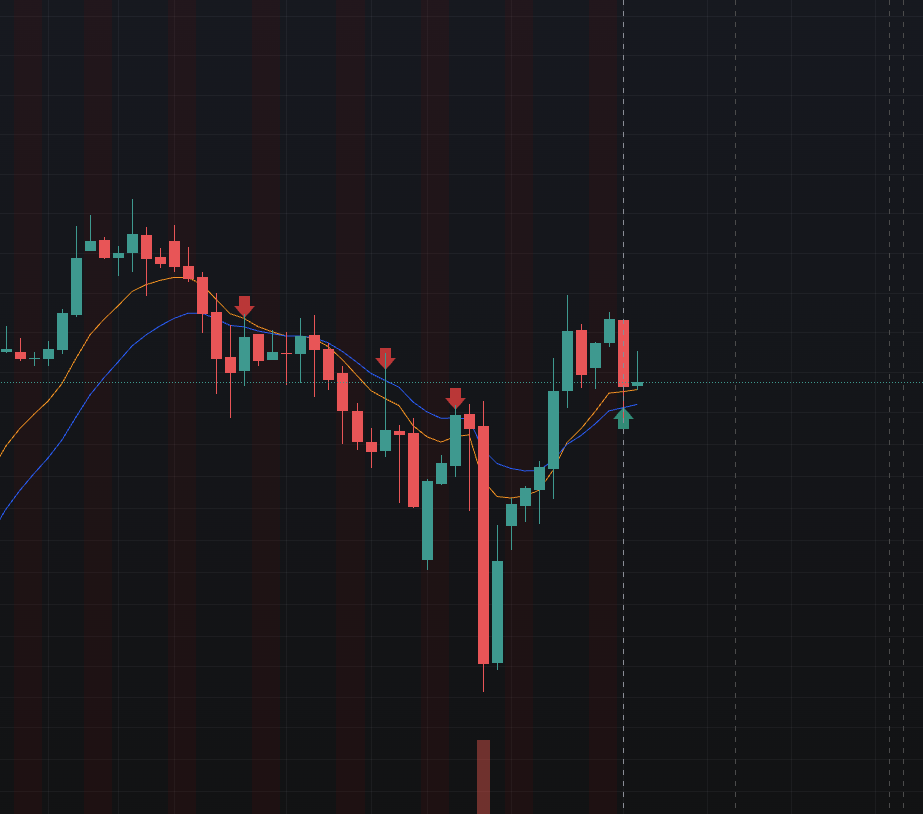
Cysic has been making serious waves in the crypto community lately. Its recent performance on platforms like CoinGecko, showing a significant surge of 73.94% in just 24 hours, clearly highlights this growing interest. But what's really fueling all this buzz? Several factors are contributing to Cysic's current popularity:
First off, if you've been watching the crypto space like I have, you'll know everyone's buzzing about scalability and privacy solutions. As more users pile into blockchain networks, the demand for efficient ways to process transactions and execute smart contracts, without messing up decentralization or security, has just exploded. Zero-Knowledge Proofs are widely recognized as a cornerstone technology for achieving this, especially with the rise of ZK-rollups that are crucial for Ethereum L2s in 2026: The Big Three Explained. Cysic is positioned right at the heart of this innovation, providing the necessary computational backbone.
Secondly, people are finally waking up to how much of a headache the computational challenges associated with ZKPs can be. Many projects struggle with the high costs and time involved in generating these proofs. Cysic's promise to significantly slash these barriers resonates strongly with developers and projects eager to implement ZK technology. It's like finding a more efficient way to mine gold – suddenly, more people can afford to do it.
Third, this whole decentralized computing idea? It's really picking up steam. Instead of relying on centralized cloud giants, Cysic leverages a network of distributed hardware, making the process more resilient, censorship-resistant, and potentially way more cost-effective. This perfectly aligns with the core ethos of Web3.
And finally, like with any hot new project, Cysic is probably getting a boost from some smart partnerships, upcoming roadmap wins, or just more eyes on it through community chatter and media. When a project shows real progress in a high-demand sector, it naturally grabs investor attention, leading to price movements like the one we've observed. For you as an Indian beginner, understanding these trends helps you see why certain projects gain popularity, much like understanding why a particular stock might surge due to new product launches or market demand.
How Cysic Works: Unpacking the Full-Stack Compute Network
Alright, to really get Cysic, let's peel back the layers and see how this "full-stack compute network" actually runs. Picture this: a huge, interconnected digital factory, but its only job is to crack these super complex math puzzles we call Zero-Knowledge Proofs (ZKPs).
Here's the core issue Cysic tackles: ZKP generation is an absolute resource hog. Traditional methods are slow, expensive, and often demand specialized, centralized hardware. Cysic decentralizes this whole process, making it faster, cheaper, and way more accessible.
Here’s a simplified breakdown of its architecture and workflow:
The Demand Side (Verifiers/Clients):
- On one side, you've got projects, developers, or even individuals who need ZKPs generated. These could be ZK-rollups needing to bundle thousands of transactions into a single proof for Ethereum's Staking Evolution: Maximizing Passive Income in 2026's Proof-of-Stake Era, privacy-focused dApps, or even AI models needing verifiable computation.
- These "clients" submit their ZKP generation tasks to the Cysic network. They specify the type of proof, the data involved (without actually revealing it, thanks to ZKPs!), and the parameters they want.
- They pay for this, naturally, using CYS tokens – that's the network's own currency.
The Supply Side (Provers/Compute Providers):
- On the other side are the "provers" – individuals or entities who contribute their computing power to the Cysic network. These provers can be anyone from a guy with a powerful GPU to dedicated data centers.
- Think of them like miners in a Proof-of-Work setup, but instead of digging for new blocks, they're "proving" ZKP computations. They're essentially renting out their hardware to solve the complex mathematical problems required to generate ZKPs.
- Provers get paid in CYS tokens for nailing these tasks and churning out valid proofs. This creates a competitive marketplace where provers vie for tasks, which naturally drives down costs and boosts efficiency.
The Decentralized Network (Orchestration Layer):
- Cysic itself acts like the smart middleman, linking clients with provers through what they call a decentralized orchestration layer. This layer handles several critical jobs:
- Task Distribution: It cleverly sends out ZKP generation tasks to available provers based on their capabilities, availability, and how reliable they are.
- Proof Verification: Once a prover generates a ZKP, the network has built-in mechanisms to quickly verify its correctness. This ensures the proofs are always legit and trustworthy.
- Payment & Incentivization: It manages the money flow from clients to provers, making sure everyone gets fair compensation for their hard computational work.
- Resource Management: It keeps an eye on the overall health and performance of the network, ensuring optimal resource allocation.
- Cysic itself acts like the smart middleman, linking clients with provers through what they call a decentralized orchestration layer. This layer handles several critical jobs:
So, by building this whole full-stack, decentralized marketplace, Cysic turns ZKP generation from a headache into a smooth, efficient service. For an Indian beginner, you can think of it as an Uber for high-performance computing, where people with powerful computers offer their services to those who need complex calculations done, all managed by a smart, fair system. This decentralized approach also offers way more resilience and censorship resistance compared to just relying on a single cloud provider.
Cysic's Core Technologies: Zero-Knowledge Proofs and Decentralized Compute
The real genius of Cysic, in my opinion, is how it brilliantly brings together two powerhouse tech advancements: Zero-Knowledge Proofs (ZKPs) and decentralized computing. Understanding these two pillars is key to grasping Cysic's true potential.
Zero-Knowledge Proofs (ZKPs)
Zero-Knowledge Proofs are a groundbreaking cryptographic technique. They allow one party (the "prover") to convince another party (the "verifier") that a statement is true, without revealing any information beyond the validity of that statement itself. Mind-blowing, right?
Why are ZKPs crucial?
- Privacy: Imagine wanting to prove you're over 18 to access a website without revealing your exact birthdate. ZKPs make this possible. In crypto, you could prove ownership of funds without revealing your wallet balance or transaction history.
- Scalability: This is where ZKPs truly shine for blockchain. Instead of processing every transaction individually on the main chain, ZK-rollups (a type of Layer 2 scaling solution) can bundle thousands of transactions off-chain, generate a single ZKP proving the validity of all those transactions, and then submit that small proof to the main blockchain (like Ethereum). This drastically reduces the load on the main chain, making it faster and cheaper. You can learn more about how different scaling solutions work in our guide on Ethereum L2s in 2026: The Big Three Explained.
- Security: ZKPs enhance security by minimizing the amount of data shared, which naturally reduces attack vectors.
- Verifiable Computation: They allow for off-chain computation to be verified on-chain, ensuring the integrity of complex operations without the expensive re-execution on the mainnet. This is particularly relevant for AI and other data-intensive applications.
The challenge, as I mentioned, is that generating these proofs is computationally intensive. This is the "ZK bottleneck" that Cysic aims to alleviate.
Decentralized Compute
Now, Cysic isn't just using ZKPs; it's using a decentralized network to pump them out. Instead of relying on a single, centralized entity (like Amazon Web Services or Google Cloud) to provide the computing power, Cysic spreads the task across a global network of independent "provers."
How it works:
- Distributed Hardware: Anyone with suitable hardware (often powerful GPUs or specialized ASICs) can join the Cysic network as a prover. They contribute their idle computing resources to solve ZKP generation tasks. This is similar in concept to how people contribute their computing power for Crypto Mining in 2026: Proof-of-Work vs Proof-of-Stake, but specifically tailored for ZKP computations.
- Resource Pooling: The network pools these distributed resources, creating a massive, flexible computing infrastructure. When a project needs a ZKP, the task is intelligently assigned to available provers.
- Incentivization: Provers are rewarded with CYS tokens for successfully completing tasks. This economic incentive encourages participation and ensures the network has ample computing power.
- Resilience and Censorship Resistance: A decentralized network is inherently more robust. There's no single point of failure that can be targeted or shut down. This resilience is a cornerstone of Web3 philosophy.
- Cost-Efficiency: By fostering competition among provers and leveraging potentially idle resources, decentralized compute can offer ZKP generation at a lower cost than centralized alternatives.
See? By mashing up these two game-changing technologies, Cysic is building a super robust, efficient, and scalable backbone for the Web3 apps of tomorrow, powered by ZKPs. It's building the plumbing for a more private and scalable digital world.
Cysic Price and Market Data
Alright, let's talk numbers. Knowing the price and market data for any crypto, including Cysic (CYS), is super important for smart decisions. But always remember, yaar, our crypto market is wild. Seriously volatile. Prices can swing like a pendulum in minutes, and what happened yesterday? No guarantee for tomorrow. For the absolute latest figures, my go-to is always reliable data sites like CoinGecko or CoinMarketCap.
Here's a hypothetical example of what Cysic's market data might look like, just for illustration (actual values will vary, obviously):
| Metric | Value (Illustrative) | Notes |
|---|---|---|
| Current Price (INR) | ₹[X,XXX.XX] | This value is highly dynamic. Always check live market data. |
| Current Price (USD) | $[XX.XX] | Also highly dynamic. |
| 24h Trading Volume | ₹[X,XXX Crore] | Indicates how much CYS has been traded in the last 24 hours. High volume often accompanies significant price movements. |
| Market Capitalization | ₹[X,XXX Crore] | Calculated by multiplying the current price by the circulating supply. It represents the total value of all CYS tokens currently in circulation. Refer to our lesson on Market Cap vs Price: Stop Getting Tricked. |
| Circulating Supply | [X,XXX,XXX] CYS | The number of CYS tokens currently available and actively traded in the market. |
| Total Supply | [X,XXX,XXX] CYS | The total number of CYS tokens that will ever exist, including those not yet released. |
| Max Supply | [X,XXX,XXX] CYS (if applicable) | The absolute maximum number of tokens that can ever be created. Some projects have a fixed max supply, others don't. |
| All-Time High (ATH) | ₹[Y,YYY.YY] | The highest price CYS has ever reached. |
| All-Time Low (ATL) | ₹[Z.ZZ] | The lowest price CYS has ever reached. |
Important Considerations for Indian Beginners:
- Volatility, my friend: Cryptocurrencies like CYS can experience rapid price swings. What goes up quickly can also come down quickly. Always be prepared for this inherent Cryptocurrency Market Volatility: Harnessing Price Fluctuations for Trading Opportunities.
- Market Cap vs. Price – this is where most beginners get tricked: Don't just look at the price per token. A lower price doesn't necessarily mean it's "cheap." Always consider the market capitalization to understand the project's overall valuation. A project with a low price but a very high circulating supply might still have a significant market cap.
- Liquidity – always check this: Make sure there's enough trading volume for CYS on the exchanges you plan to use . Good liquidity means you can buy and sell without significant price impact.
- Tokenomics – dive deep here: Look into the project's tokenomics – how tokens are distributed, vested, and used within the ecosystem. This can seriously impact long-term price potential. Our lesson on Tokenomics 101: Supply, Emissions, Unlocks is a great resource.
Bottom line: always, always, always do your own research (DYOR) before putting a single rupee in. And never, ever invest more than you're okay with losing. Seriously.
How to Buy Cysic on your exchange
So, you're an Indian crypto enthusiast keen on Cysic (CYS)? Good choice! Your exchange is probably one of the easiest and most trusted platforms for us here. As a beginner myself, here's how you can safely grab some CYS tokens, step-by-step.
Before You Begin:
- Understand Cryptocurrency: If you're completely new, take a moment to understand What Is Cryptocurrency? and how these digital assets actually work.
- Risk Awareness: Remember, crypto markets are wild. Only invest what you can comfortably afford to lose.
Step-by-Step Guide to Buying CYS on your exchange:
Create an Account on your exchange:
- First, download the exchange app from the Google Play Store or Apple App Store, or just hop onto their website.
- Sign up using your email address or mobile number. And make sure that password is strong, alright?
- Verify your email/mobile number with an OTP (One-Time Password).
Complete Your KYC (Know Your Customer):
- This isn't optional, it's a must for all regulated exchanges in India, thanks to anti-money laundering (AML) rules.
- You'll typically need to provide:
- Your PAN Card details.
- Aadhaar Card details (for address verification).
- A selfie for live identity verification.
- The KYC usually zips through in minutes, maybe a few hours for approval.
Link Your Bank Account:
- Once KYC is approved, you'll need to link your Indian bank account to your exchange wallet. This is key for putting in and taking out your Indian Rupees (INR).
- Provide your bank account number, IFSC code, and account holder name.
- Your exchange might do a tiny test deposit (like ₹1) to verify your account.
Deposit INR into Your exchange Wallet:
- Head over to the "Add Funds" or "Deposit INR" section on the exchange app/website.
- Choose your preferred deposit method (e.g., UPI, Bank Transfer/IMPS/NEFT). UPI, in my experience, is usually the quickest and easiest for smaller amounts.
- Enter the amount of INR you want to deposit.
- Follow the on-screen instructions to complete the payment. The funds should show up in your exchange INR wallet within minutes (for UPI) or a few hours (for bank transfers).
Search for Cysic (CYS):
- Once your INR balance is updated, go to the "Markets" or "Prices" section.
- Use the search bar and type "CYS" or "Cysic."
- Select the CYS/INR trading pair.
Place Your Buy Order:
- You'll see the current price chart and order book.
- Market Order: This is for when you're impatient, like me sometimes! If you want to buy CYS immediately at the current market price, select "Market" order. Enter the amount of INR you want to spend, and the system will execute the trade instantly.
- Limit Order: Now, this is a smart move if you want to snag CYS at a specific price lower than the current market price, select "Limit" order. Enter your desired buy price and the amount of CYS you wish to purchase (or the INR you wish to spend). Your order will only execute if the market price reaches your specified limit. This strategy can be super helpful in volatile markets.
- Review your order details and confirm the purchase.
Monitor Your CYS Holdings:
- After your order goes through, the CYS tokens will appear in your exchange portfolio or wallet.
- You can track their value and decide when to sell or hold. Remember to consider the Custodial vs Non-Custodial: Decision Framework for long-term holding.
Important Tips:
- Start Small, my friend: Especially as a beginner, start with a small amount that you're totally comfortable losing.
- Security – top priority: Always enable Two-Factor Authentication (2FA) on your exchange account for enhanced security. Seriously, do it.
- Fees – don't forget them: Be aware of trading fees and withdrawal fees on your exchange. These are usually a small percentage of your transaction.
Follow these steps, and you'll be confidently buying Cysic (CYS) on your exchange, kicking off your journey into the exciting world of decentralized compute networks!
Tax Implications of Cysic in India
Alright, let's talk about the dreaded "T" word: Taxes. Crypto taxation in India? It's a bit of a maze, but super important for every Indian crypto investor, Cysic holders included. Our government has some specific rules for Virtual Digital Assets (VDAs), so here's the lowdown:
1. Tax on Gains (30% Flat Rate): Any income you make from transferring (selling, exchanging, or even gifting under certain conditions) a Virtual Digital Asset like CYS is slapped with a flat 30% income tax.
- No Deductions, period: You cannot deduct any expenses incurred during the acquisition or transfer of CYS, except for the cost of acquisition itself. This means you can't offset mining costs, internet bills, or trading fees against your gains. Hard truth.
- No Set-off of Losses – this is a big one: If you lose money from selling CYS, you cannot set off these losses against any other income (e.g., salary, business income, or even gains from other cryptocurrencies). This is a significant point to remember.
- No Basic Exemption Limit – yes, really: The 30% tax applies from the very first rupee of profit, no matter what your income slab is.
Example: If you buy CYS for ₹10,000 and sell it for ₹15,000, your profit is ₹5,000. You will pay 30% of ₹5,000, which is ₹1,500, as tax.
2. 1% TDS (Tax Deducted at Source): A 1% Tax Deducted at Source (TDS) is applicable on payments made for the transfer of VDAs.
- Who Deducts: This TDS is typically deducted by your crypto exchange when you sell or swap your CYS tokens.
- Threshold: The TDS applies if the value of the transaction crosses ₹10,000 in a financial year (or ₹50,000 for specified persons like individuals/HUFs not required to get their accounts audited).
- Adjustable: The 1% TDS isn't an extra tax; it's an advance tax. You can adjust this amount against your final 30% tax liability when filing your income tax return.
Example: If you sell CYS worth ₹20,000 on your exchange, the exchange will deduct ₹200 (1% of ₹20,000) as TDS and credit ₹19,800 to your account. When you calculate your final tax, this ₹200 will be considered as already paid.
3. Gifting of CYS: If you receive CYS as a gift, it will be taxed in your hands at the market value on the date of receipt, provided the value exceeds ₹50,000 in a financial year. However, gifts from certain relatives (as defined by tax laws) are exempt.
4. Mining/Staking Rewards: Now, income from mining CYS (if that's applicable) or staking rewards (if Cysic introduces staking) would likely be considered business income or income from other sources and taxed according to your income tax slab. But honestly, the specific classification can be a grey area and might evolve.
5. Maintaining Records: It is absolutely essential to maintain detailed records of all your CYS transactions, including:
- Date of purchase/sale/swap.
- Amount of CYS bought/sold.
- Price per CYS in INR.
- Associated fees.
- Exchange used.
Disclaimer: Look, tax laws can change, and their interpretation can vary. This information is purely for educational purposes and is not tax advice. I highly recommend you chat with a qualified tax advisor or chartered accountant who specializes in crypto taxation in India to ensure you're compliant and filing accurately. For a more detailed understanding, please refer to our dedicated Crypto Tax Guide India and our lesson on Taxable Events: Sell/Swap/Spend.
Understanding Cysic's Ecosystem Role
Cysic, my friend, isn't just another shiny new crypto project. Nah, it's actually building some serious foundational infrastructure that could totally change the game for the wider Web3 ecosystem. Being a full-stack compute network for Zero-Knowledge Proofs (ZKPs) puts it right at the sweet spot where several booming technologies meet.
Here’s how Cysic fits into the larger picture:
Enabling Scalability for Layer 2 Solutions:
- The biggest headache for many popular blockchains, especially Ethereum, is scalability. ZK-rollups are widely seen as one of the most promising fixes. They let transactions be processed off-chain and then cryptographically proven on the main chain.
- Cysic directly attacks this problem. By making ZKP generation quicker and cheaper, it literally fast-tracks the adoption and efficiency of ZK-rollups. This means faster transactions, lower fees, and a smoother user experience for a vast array of decentralized applications (dApps). It truly empowers Layer 2 solutions to deliver on their promise.
Boosting Privacy-Preserving Applications:
- Beyond just scalability, ZKPs are absolutely fundamental for privacy. Projects building private transactions, confidential smart contracts, or verifiable credentials (like proving age without revealing identity) all lean heavily on ZKP technology.
- Cysic provides the underlying compute power for these applications, making it easier for developers to integrate robust privacy features without incurring exorbitant computational costs. This, my friend, is how we get more innovation in Web3's privacy sector.
Fueling Decentralized AI and Verifiable Computing:
- The intersection of AI and blockchain is a rapidly growing field. One of the challenges in decentralized AI is making sure that AI computations are performed correctly and without manipulation. ZKPs can be used to prove the integrity of an AI model's training or inference process without revealing the sensitive data or the model itself.
- Cysic's network can step in as that crucial compute layer for these verifiable AI computations, bringing trust and transparency to decentralized machine learning. Similarly, any complex computation done off-chain can be verified on-chain using ZKPs, and Cysic provides the engine for that verification.
Supporting Web3 Gaming and Metaverse:
- As Web3 gaming and metaverse environments get more sophisticated, they'll need immense computational power for complex in-game logic, asset generation, and ensuring fair play. ZKPs can be used for things like proving game state changes, verifying actions, or even for confidential transactions within games.
- Cysic's super-efficient ZKP generation could be a lifesaver for these platforms, helping them manage massive computational loads while keeping things decentralized and secure.
Democratizing Access to High-Performance Compute:
- By decentralizing ZKP generation, Cysic lowers the barrier to entry for smaller projects and independent developers. They no longer need to invest in expensive specialized hardware or rely on centralized providers. This truly democratizes access to advanced cryptographic computation, sparking innovation across the entire Web3 landscape.
- It's akin to how open-source software democratized development – Cysic democratizes access to a crucial piece of cryptographic infrastructure.
Basically, Cysic is building a core utility layer for the whole ZKP economy. It's not just some token; it's a vital piece of plumbing that could enable a truly scalable, private, and verifiable future for blockchain technology. Its role is fundamental, much like the role of a Layer 1 blockchain itself, which you can explore further in our article on Why Layer 1 Projects Have Higher Chances of Airdrops Compared to Layer 2.
Is Cysic a Good Investment? (Considerations)
So, the million-dollar question: Is Cysic (CYS) a "good investment"? Honestly, yaar, that totally depends on your personal financial goals, how much risk you're cool with, and how much homework you're willing to do. As your crypto buddies and educators here at Fedha Academy, we have to stress: This is not financial advice. Instead, think of this as a checklist, a framework of things to consider so you can make your own smart decision.
Here are key factors to evaluate before considering an investment in CYS:
Technology and Problem Solved:
- Strength of ZKP Acceleration: How well does Cysic really speed up ZKP generation? Is its technology demonstrably superior or more efficient than competitors?
- Market Need: Is there a solid, growing demand for faster, cheaper ZKP computation? Given the trend towards ZK-rollups and privacy solutions, the answer appears to be yes, but assess the longevity of this demand yourself.
- Innovation: Does Cysic bring something truly unique to the table, setting it apart from other decentralized compute networks or ZKP-focused projects?
Team and Roadmap:
- Experience: Who's the brains behind Cysic? Do they have a strong track record in cryptography, distributed systems, and blockchain?
- Execution: Have they actually delivered on their roadmap promises consistently? A history of successful delivery indicates competence.
- Vision: Do they have a clear, ambitious, yet realistic vision for Cysic's future development and adoption?
Market Demand and Adoption:
- Partnerships: Has Cysic teamed up with any big ZK-rollup projects, Layer 1s, or other Web3 players who will actually use their network? Real-world adoption is everything.
- Developer Ecosystem: Is it easy for developers to integrate Cysic into their apps? A buzzing dev community is a huge green flag for future growth.
- Competition: Who are Cysic's rivals in this decentralized compute and ZKP acceleration game? How does Cysic stand out from them?
Tokenomics (CYS):
- Utility: What's the main reason to hold the CYS token? Is it for paying for compute, staking, governance, or a mix? Strong utility drives demand. You can learn more about this in our Tokenomics 101: Supply, Emissions, Unlocks lesson.
- Supply Dynamics: What's the total supply, circulating supply, and how quickly are new tokens coming out? Are there big token unlocks for the team or early investors that could cause selling pressure?
- Incentives: Are the rewards for provers and other network participants well-designed to keep the network healthy and decentralized long-term?
Risk Factors:
- Technological Risk: Look, ZKPs and decentralized compute are cutting-edge. There could be unexpected challenges or a competitor could drop something revolutionary.
- Market Risk: The whole crypto market is a rollercoaster. A broad market crash can pull even great projects down. Always be aware of [Crypto Market Cycles: Bull and Bear Market Strategies 2026].
- Regulatory Risk: Crypto laws in India and globally are still taking shape. Any new rules could hit Cysic's operations or CYS's value.
- Security Risk: Just like any blockchain project, Cysic isn't immune to smart contract bugs or network attacks.
Your Investment Strategy:
- Diversification: Never, ever put all your eggs in one basket. Seriously, spread your crypto investments around.
- Long-Term vs. Short-Term: Are you here for quick flips (super risky, by the way) or long-term growth? For long-term plays, I always recommend strategies like [Crypto Dollar Cost Averaging: The Ultimate Long-Term Wealth Building Strategy].
- Risk Tolerance: How much are you truly okay with losing? Only invest capital you can comfortably afford to lose, without it affecting your daily life.
Conclusion: Cysic addresses a critical need in the blockchain space by accelerating ZKP generation. This positions it in a high-growth sector. However, like all crypto investments, it carries significant risks. So, bottom line: do your own extensive research, really get the tech, check out the team, and most importantly, consider your personal financial situation before making any investment decision. This isn't a game, it's your money, yaar.
FAQs about Cysic
Hey there! Got more questions about Cysic (CYS)? No worries, here are some frequently asked ones to clear things up even further for us Indian beginners:
Q1: What is the primary use case for the CYS token?
The CYS token? That's the native crypto of the Cysic network, and it's got a few super important jobs:
- Payment for Compute: Projects and developers pay for ZKP generation services on the Cysic network using CYS tokens. Simple as that.
- Incentivization: Provers (those contributing computing power) are rewarded with CYS tokens for successfully completing ZKP generation tasks. It keeps the network humming!
- Staking (Potential): While not explicitly detailed as a core function for passive income yet, most decentralized compute networks often have staking mechanisms. Token holders could stake CYS to secure the network or participate in governance, earning rewards. Keep an eye out for this!
- Governance (Potential): Eventually, CYS holders might get the power to participate in the decentralized governance of the Cysic network, voting on key proposals and future developments.
Q2: How does Cysic compare to traditional cloud computing services like AWS or Google Cloud?
Traditional cloud services, like AWS or Google Cloud, are basically centralized, general-purpose computing powerhouses. While they're powerful for a lot of tasks, they aren't specifically optimized for the unique demands of Zero-Knowledge Proof (ZKP) generation, which needs highly specialized cryptographic computations.
Cysic, though? It's a decentralized, specialized compute network built and optimized specifically for ZKP acceleration. That's the key difference. This offers several cool advantages:
- Efficiency: Tailored hardware and software lead to faster and more cost-effective ZKP generation.
- Decentralization: No reliance on a single provider, which means better censorship resistance and resilience.
- Cost-Effectiveness: Competition among provers in a decentralized marketplace can drive down prices compared to fixed cloud rates.
- Trustlessness: ZKP verification ensures the integrity of computation without needing to trust a central entity.
Q3: Is Cysic truly decentralized?
Cysic is all about full decentralization for its compute network, no doubt. This means that the computing power comes from a distributed network of independent "provers" rather than one big company. The orchestration layer, which handles task distribution and verification, is also designed to be decentralized, often using blockchain-based smart contracts to ensure transparency and trustlessness. This decentralized architecture is a core principle of its design, perfectly aligning with Web3.
Q4: What exactly are Zero-Knowledge Proofs (ZKPs) in simple terms?
Okay, imagine you want to prove to your buddy that you know a secret password, but without actually telling them the password. Tricky, right? A Zero-Knowledge Proof is a cryptographic method that allows you to do just that. You can prove you possess the knowledge (or that a computation was performed correctly) without revealing any of the underlying information. In blockchain, ZKPs are vital for:
- Privacy: Proving you meet certain criteria (e.g., age, balance) without revealing sensitive details.
- Scalability: Verifying thousands of off-chain transactions with a single, small proof on the main chain, making networks faster and cheaper. Cysic's big role is to make generating these complex proofs much faster and more accessible for everyone.
Q5: Who is behind the Cysic project?
While team specifics can always change and evolve, Cysic is generally backed by a squad of serious experts in cryptography, blockchain technology, distributed systems, and high-performance computing. Projects like Cysic often have publicly available team information on their official website or whitepaper, detailing their backgrounds and experience. It's always a good practice for us investors to research the team's credentials and track record to assess the project's credibility and potential for execution.
Ready to explore more? Dive into our Crypto Glossary to demystify crypto jargon or learn about Technical Analysis Strategies for Cryptocurrency Traders: Master the Charts on Fedha Academy to enhance your trading skills. Remember, my friend, in this fast-paced crypto world, continuous learning is your superpower!