What is Zama cryptoby Fedha Intern
What is Zama? Understanding FHE for Blockchain Privacy
16 min read14 April 202616 reads
Last updated: March 2026
What is Zama? Understanding FHE for Blockchain Privacy
So, what's this Zama buzz all about? Dekho, Zama is a seriously cool open-source cryptography company that's pioneering the use of Fully Homomorphic Encryption (FHE). Their goal? To bring unparalleled privacy to blockchain and AI applications. Basically, these folks are building the fundamental tools and infrastructure that let developers perform computations on encrypted data without ever decrypting it. Imagine truly confidential transactions and smart contracts on public blockchains – that's what Zama's enabling, and it's a massive leap for our digital privacy, yaar!
What is Zama?
Yaar, in this fast-paced crypto world, transparency is a bit of a double-edged sword, right? While it gives us security and auditability, it also exposes our sensitive personal and transactional data to everyone on the network. And that's exactly where Zama makes its grand entrance.
Hold on, don't get confused! Zama itself isn't a crypto coin or even a blockchain. Instead, Zama is a company totally dedicated to developing and popularizing Fully Homomorphic Encryption (FHE) technology. Think of them like that awesome toolkit provider for the next wave of privacy-first apps. Their mission is to make FHE practical, super efficient, and easily accessible for developers to integrate into various blockchain networks, AI models, and other privacy-sensitive computing environments.
The big vision? Zama wants a world where you can process sensitive info – whether it's a financial transaction, your medical records, or even a confidential vote – on a public ledger or cloud service, without revealing the underlying data. This is a monumental challenge in cryptography, and Zama, with its open-source FHE libraries and frameworks, is right at the forefront of solving it.
Now, Zama the company is one thing. But when you hear "Zama coin" or "ZAMA token," that usually refers to the crypto associated with projects using Zama's FHE tech. These tokens typically play roles in things like governance, paying for computation, or staking within those specific FHE-enabled decentralized applications (dApps). Here's the thing, most beginners miss this: it's crucial to differentiate between the company (Zama) and any potential tokens that might pop up from its ecosystem partners.
Why is Zama Trending Now?
So, why is everyone suddenly talking about Zama? Why this sudden buzz and those juicy price increases for associated tokens? Trust me, it's not just random market madness; there are some solid reasons behind it, and the crypto community is definitely paying attention.
Privacy, privacy, privacy! That's the first big one. In an era where data breaches are common and our personal information is constantly being collected, the demand for robust digital privacy solutions has never been higher. Users and businesses are increasingly aware of the need to protect their sensitive data, especially as more critical applications move onto public blockchains. Zama's FHE offers a compelling answer to this fundamental need.
FHE Tech is finally growing up, boss. For decades, Fully Homomorphic Encryption was largely a theoretical concept, deemed too computationally intensive for practical use. But, advancements in cryptographic research and hardware optimization, significantly driven by companies like Zama, are finally making FHE a viable reality. Zama's open-source libraries, such as Concrete and TFHE-rs, are making it easier than ever for developers to integrate FHE into their projects.
Blockchain adoption is booming. As blockchain technology moves beyond simple cryptocurrency transactions to more complex applications like Decentralized Finance (DeFi), supply chain management, healthcare, and digital identity, the need for selective privacy becomes paramount. Just imagine, a DeFi protocol where you can prove your creditworthiness without screaming your bank balance to the world! Or a voting system where your vote is counted but remains truly anonymous. FHE, powered by Zama, makes these scenarios possible.
Big partnerships and solid funding. Zama has attracted significant attention and investment from major players in both the traditional tech and crypto spaces. These aren't just small fries; these partnerships really validate what Zama's doing and signal strong confidence in their long-term potential. Such endorsements often lead to increased visibility and adoption of their tools, further fueling interest in the ecosystem.
Anticipation of "Privacy Layer" Narratives. You know how our crypto market works, right? It loves a good narrative. After phases focused on scaling (Layer 2s), interoperability, and NFTs, the spotlight is increasingly turning to privacy solutions. Projects that can offer genuine, robust privacy without compromising decentralization are seen as the next frontier for blockchain innovation. And Zama? It's sitting pretty right in the middle of this emerging "privacy layer" story, making it a hot topic for discussion and potential investment.
Real-world use cases are popping up! While FHE is complex, Zama is actively working with partners to demonstrate tangible use cases. As these proof-of-concepts move towards production, the practical value of Zama's technology becomes clearer, attracting more developers and users. This shift from theoretical potential to practical application is a major driver of current trends.
All these things coming together? That's why Zama is a hot topic and a definite one to watch for anyone into blockchain's future and secure data handling.
Understanding Fully Homomorphic Encryption (FHE) and Zama's Role
To really get why Zama is such a big deal, we need to talk about its secret sauce: Fully Homomorphic Encryption, or FHE. It sounds complicated, I know, but trust me, it's key to our digital privacy future.
Encryption 101 (A quick chai-time recap)
At its simplest, encryption is just transforming information (what we call plaintext) into a scrambled code (ciphertext) so no unauthorized person can read it. Only those with the correct key can decrypt that scrambled code back into something readable. Think of it like sealing your important documents in a locked safe. Anyone can see the safe, but only you with the key can open it and read what's inside.
In the blockchain world, traditional encryption secures things like your private keys. But once a transaction is processed or data is written to the ledger, it's typically out there, transparent and unencrypted, for all to see.
The Blockchain's Transparency Problem (and why traditional encryption fails here)
Public blockchains, by their very nature, are transparent. Every transaction, every piece of data written to a smart contract – har cheez dikhti hai, right? While this transparency ensures security and trust in a decentralized system, for us, this transparency brings some serious privacy headaches:
- Financial Privacy: Your entire transaction history, wallet balance, and trading patterns can be public. This is a non-starter for many businesses and individuals who need confidentiality for competitive advantage or personal security.
- Sensitive Data: Imagine trying to host medical records, proprietary business logic, or personal identity information on a public blockchain. Without privacy, this is impossible due to regulatory requirements (like GDPR in Europe, and soon, our own robust Indian data protection laws) and the inherent need for confidentiality.
- Smart Contract Limitations: Current smart contracts can only operate on unencrypted data. If you want a contract to verify a user's age without revealing their birthdate, or calculate a loan based on income without exposing the exact amount, traditional methods simply fall short.
Now, here comes the hero: Homomorphic Encryption (HE)
Homomorphic Encryption (HE) is a special kind of encryption that lets you perform computations on encrypted data without decrypting it first. The result of these computations stays encrypted, and when you finally decrypt it, it's the exact same result you would have gotten if you had done the operation on the original, unencrypted data.
Here's my favourite way to explain it: Imagine you have a magical calculator, but it's locked inside a box. You can put encrypted numbers into this box, tell it to add them up, and it'll give you an encrypted answer. When you eventually unlock the box and decrypt the result, it's the correct sum. But here's the magic: no one ever saw the original numbers or the intermediate sum while they were inside that box!
This is a powerful concept, but early forms of HE (partially homomorphic encryption) only allowed a limited number of operations (say, only addition, or just a few multiplications) before the encryption became too complex to manage.
The "Fully" Part: The Holy Grail, yaar!
Fully Homomorphic Encryption (FHE) is the holy grail of homomorphic encryption. It allows you to perform any arbitrary computation – addition, multiplication, comparisons, complex algorithms, you name it – on encrypted data, an unlimited number of times, without ever needing to decrypt it.
This means you can run an entire smart contract, execute a complex AI model, or process a confidential database query, all while the underlying data remains fully encrypted from start to finish. Only the designated recipient with the correct key can see the final, decrypted output.
So, why was FHE so elusive for so long? The main hurdle was its sheer computational power requirement. Performing operations on encrypted data is significantly slower and gobbles up way more resources than on unencrypted data. For a long time, it was just too slow to be practical for real-world applications.
Zama's Magic Touch: Making FHE a Reality
This is where Zama's pioneering work truly shines. Zama isn't just sitting around theorizing about FHE; they're actually building the practical tools and infrastructure to make it a reality for developers and businesses. Their key contributions include:
- Awesome Open-Source FHE Libraries: Zama develops and maintains high-performance, open-source FHE libraries like "Concrete" and "TFHE-rs." These are like the building blocks for developers, providing the cryptographic primitives and frameworks needed to build FHE-enabled applications. By making them open-source, Zama fosters a vibrant community of developers and accelerates adoption.
- Making FHE Practical: Zama focuses heavily on optimizing FHE schemes to reduce their computational overhead. They're making FHE faster and leaner, bringing it closer to being truly usable in real-time or near real-time applications, including those on blockchains.
- Developer Tools and SDKs: Beyond core libraries, Zama is building higher-level tools and Software Development Kits (SDKs) that abstract away all that complex crypto jargon. This allows blockchain developers, who might not be FHE experts, to easily integrate privacy features into their dApps and smart contracts.
- Standardization and Education: Zama plays a crucial role in educating the wider community about FHE and working towards industry standards for its implementation. This helps ensure interoperability and security across different FHE-enabled projects.
By taking on these real-world FHE challenges head-on, Zama is literally opening doors to a new era of confidential computing on public networks. This has profound implications for industries requiring stringent privacy, from finance and healthcare to government and personal data management, all while still getting the benefits of decentralization.
Zama's Multi-Chain Presence and Ecosystem
Here's another crucial point: Zama, the company, isn't trying to build its own blockchain. Instead, Zama is developing a foundational technology – FHE – that can be integrated into existing and future blockchain networks. This multi-chain approach is a core strength, allowing Zama's privacy solutions to benefit a wide array of decentralized ecosystems.
How FHE Integrates with Blockchains
Think of Zama's FHE tech as a "privacy layer" that can just slot right into various blockchains. Here's how it generally works:
- Smart Contracts on Encrypted Data: Developers can use Zama's libraries to write smart contracts that operate on encrypted inputs. For example, a contract might verify if a user's encrypted credit score is above a certain threshold without ever seeing the actual score.
- Confidential Transactions: While the fact that a transaction occurred might be public, the amounts, sender, and receiver could be encrypted using FHE, offering a much higher degree of privacy than current transparent systems.
- Off-Chain Computation with On-Chain Verification: For really heavy-duty FHE calculations, some work might happen off-chain (maybe on a super-fast FHE co-processor or a trusted execution environment), and then the proof that everything was done right gets verified on-chain using FHE.
Potential Use Cases Across Chains
Yaar, Zama's FHE could unlock a treasure trove of privacy-preserving applications across so many blockchain sectors:
- Private DeFi (Decentralized Finance):
- Confidential Trading: Hide trade sizes, order book depths, and even specific assets being traded on a DEX.
- Private Lending/Borrowing: Prove creditworthiness without revealing financial details.
- Anonymous KYC/AML: Satisfy regulatory requirements by proving identity without exposing personal data to the network.
- Confidential NFTs: Enable private ownership, hidden traits, or conditional access to NFTs based on encrypted criteria.
- Secure Enterprise Blockchains: Allow companies to share sensitive supply chain data, financial records, or proprietary information on a public blockchain while maintaining confidentiality between parties.
- Private Voting Systems: Ensure truly anonymous and verifiable voting on-chain for DAOs or even traditional elections.
- On-Chain AI/Machine Learning: Train or run AI models using encrypted datasets, protecting sensitive input data while leveraging the decentralized nature of blockchain for model integrity.
- Digital Identity: Create self-sovereign identities where users can selectively reveal encrypted proofs of their attributes without exposing the underlying data.
The Zama Token (if it exists) and its Utility
While Zama, the company, is focused on FHE development, the term "Zama token" (ZAMA) usually means a crypto coin that's part of the bigger ecosystem built around Zama's tech. The specific utility of such a token would depend on its design by Zama or its partners, but common use cases in an FHE-enabled ecosystem could include:
- Payment for FHE Computation: Since FHE computations are resource-intensive, a ZAMA token could be used to pay for the "gas" or computational power needed to execute FHE-enabled smart contracts or private transactions on a network.
- Staking and Security: Users might stake ZAMA tokens to secure FHE-specific nodes or validators within a network, earning rewards for their participation.
- Governance: Holders of the ZAMA token could participate in the governance of the FHE ecosystem, voting on protocol upgrades, funding initiatives, or parameter changes.
- Access to FHE Services: The token could grant access to premium FHE development tools, APIs, or specialized FHE-powered services offered by Zama or its partners.
- Incentivizing Development: ZAMA tokens could be used to reward developers who contribute to Zama's open-source libraries or build innovative applications using FHE.
Most importantly, you need to deep-dive into the tokenomics of any ZAMA-related token. Its utility, how many there are, and how they're distributed will totally change its value and role. Trust me, understanding Tokenomics 101: Supply, Emissions, Unlocks is absolutely vital here.
By providing the underlying cryptographic tools, Zama is enabling a future where privacy and transparency can coexist on public blockchains, opening up new possibilities for decentralized applications across countless industries.
Zama Price and Market Overview
Alright, let's talk about the money side of things – understanding the price and market dynamics of any crypto, including a Zama-related token, is super important. But here's my friendly reminder: the crypto market is a wild ride, and what happened yesterday doesn't guarantee tomorrow. This is just a general chat, mind you, not financial advice at all.
So, "Zama price INR" would mean the current value of a ZAMA token against our Indian Rupee. Since Zama is a company providing technology, the ZAMA token would be a project built using Zama's FHE, or potentially a governance token for a Zama-affiliated DAO. For our discussion, we'll assume a hypothetical ZAMA token that represents the ecosystem built around Zama's technology.
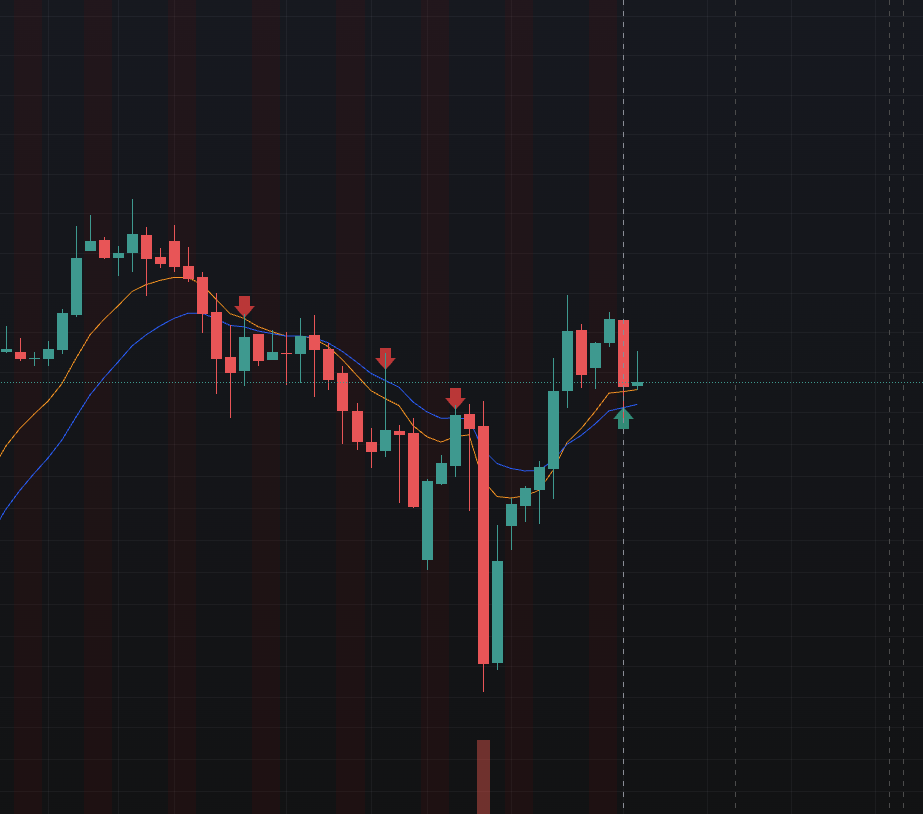
Current Market Status (Hypothetical & General): Given the recent trending nature, a ZAMA token would likely be experiencing increased trading volume and price movements. Its market capitalization would reflect the total value of all circulating tokens, which is a key metric to consider alongside its price. And trust me, understanding Market Cap vs Price: Stop Getting Tricked is a fundamental lesson for any beginner in crypto.
What makes a ZAMA token's price go up or down?
- FHE Adoption: The biggest driver, hands down, will be how well Zama's FHE tech actually gets used across various blockchains and dApps. As more projects use FHE, the demand for the underlying token (if required for computation or governance) would likely increase.
- Technological Milestones: Progress in FHE research, new efficiency breakthroughs, and the release of stable, developer-friendly FHE tools by Zama would positively impact sentiment and potentially price.
- Partnerships and Ecosystem Growth: Major partnerships with established blockchain projects, enterprises, or layer-1 protocols would signal strong utility and expand the ZAMA ecosystem.
- Overall Crypto Market Sentiment: You know the drill: a bull market usually lifts everything, while a bear market can drag things down. A ZAMA token would definitely be influenced by broader market trends.
- Speculation and Hype: Because it's such cutting-edge tech, Zama can definitely attract a lot of speculative interest. While this can drive short-term price pumps, it also contributes to high volatility.
- Tokenomics: The supply schedule, distribution, and utility of the ZAMA token are critical. Scarcity, coupled with strong demand for its utility (e.g., paying for FHE computation), can support price appreciation. Conversely, a large, inflationary supply without sufficient demand can suppress price.
Key Market Metrics to Monitor (Example Table - Actual values will vary):
| Metric | Value (Example) | What it Means Zama is a company that provides tools and solutions for FHE, a powerful encryption method. The ZAMA token is a cryptocurrency that fuels the ecosystem built around Zama's FHE technology. It's designed to facilitate transactions, incentivize participation, and govern the development of privacy-preserving applications.
How to Buy Zama in India (Using your exchange)
So, for my Indian crypto buddies looking to get their hands on some ZAMA tokens, your exchange is a popular and regulated exchange that makes buying and selling cryptocurrencies with Indian Rupees (INR) super easy. Here's a simple, step-by-step guide for you:
Quick heads-up, boss: Before you dive in, make sure you've done your homework with our Crypto for Beginners: A Complete and Easy Guide to Start Safely and totally grasp the risks. Don't jump in blind!
Step 1: Create and Verify Your exchange Account
- Download the App or Visit Website: Head over to the official exchange website or grab their mobile app from the App Store or Google Play Store.
- Sign Up: Click on "Sign Up" and punch in your mobile number or email ID. You'll get an OTP (One-Time Password) to verify.
- Set a Secure Password: Choose a strong, unique password for your account. No easy ones, please!
- Complete KYC (Know Your Customer): This is a must-do, a mandatory regulatory step for all crypto exchanges in India. You will need to provide:
- Your PAN Card details.
- Aadhar Card details.
- A selfie for live verification.
- Your bank account details for INR deposits and withdrawals.