Blockchainby Abhishek choudhary
The DePIN Revolution: How Your Spare Wi-Fi Is Worth Millions
2 min read14 January 202642 reads
Written by

1 follower
What Is DePIN?
DePIN (Decentralized Physical Infrastructure Networks) is a new Web3 concept where everyday people help build real-world infrastructure — and get paid in crypto for it.
Instead of companies owning all infrastructure like Wi-Fi networks, sensors, storage, or energy grids, people share their resources and earn rewards.
In simple words:
DePIN turns unused physical resources into income.
Your spare Wi-Fi, unused storage, or idle hardware suddenly becomes valuable.
How Your Wi-Fi Becomes Valuable:
Imagine thousands of people sharing a small part of their internet connection. Together, they create a global decentralized wireless network.
Companies and users can then use this network instead of relying only on telecom giants.
You earn tokens for:
Providing coverage
Keeping devices online
Supporting network quality
Your small contribution becomes part of a massive global system.
Real DePIN Examples:
Here are popular DePIN projects:
Helium Network
Users run hotspots and earn tokens by providing wireless coverage for IoT devices.
Filecoin / Arweave
Users share storage space and get paid for hosting data.
Energy & Sensor Networks
Some projects reward people for sharing solar power data, air quality data, or traffic data.
All of these turn physical infrastructure into community-owned networks.
Why DePIN Is So Powerful:
Traditional infrastructure is:
Expensive
Centralized
Slow to expand
DePIN is:
Community-built
Low cost
Rapidly scalable
Instead of one company building 1 million towers, 1 million people build one network.
Advanced Concept: Token Incentives:
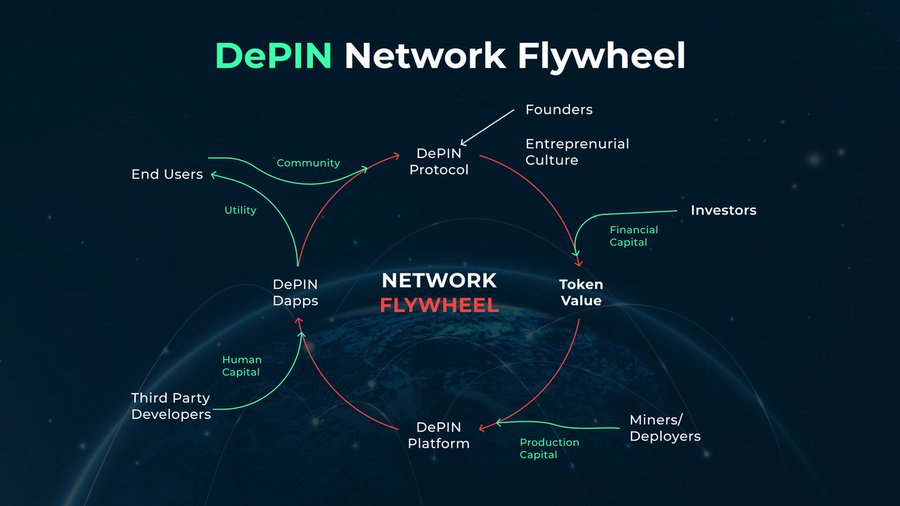
DePIN works because of token incentives.
Tokens motivate people to:
Install hardware
Maintain uptime
Expand coverage
Improve quality
This creates a self-growing system where the network improves as more users join.
This is called incentive-driven infrastructure.
Why Investors Care:
Investors see DePIN as:
A bridge between crypto and real world
A replacement for centralized infrastructure models
A trillion-dollar opportunity
Because DePIN doesn’t just move money —
it moves physical systems into decentralized ownership.
Challenges Still Exist:
DePIN is powerful, but not perfect:
Hardware costs
Regulation issues
Network reliability
User education
But just like early internet infrastructure, DePIN is still evolving.
What the Future Looks Like:
In the future, you may earn from:
Your Wi-Fi
Your router
Your car sensors
Your home energy system
Your unused computing power
Not by selling them — but by sharing them.
Final Thoughts:
DePIN is not just about crypto rewards.
It is about changing who owns infrastructure.
From corporations → to communities.
From closed systems → to open networks.
And in that shift, your spare Wi-Fi is no longer useless —
it’s part of a global, decentralized economy.
The DePIN revolution proves that the future of infrastructure belongs to the people who use it.