Bitcoinby Abhishek choudhary
Order Books vs AMMs vs Hybrid Models — The Deep Market Microstructure of Crypto
3 min read14 January 202654 reads
Written by

1 follower
1. Order Books — Precision & Traditional Market Structure
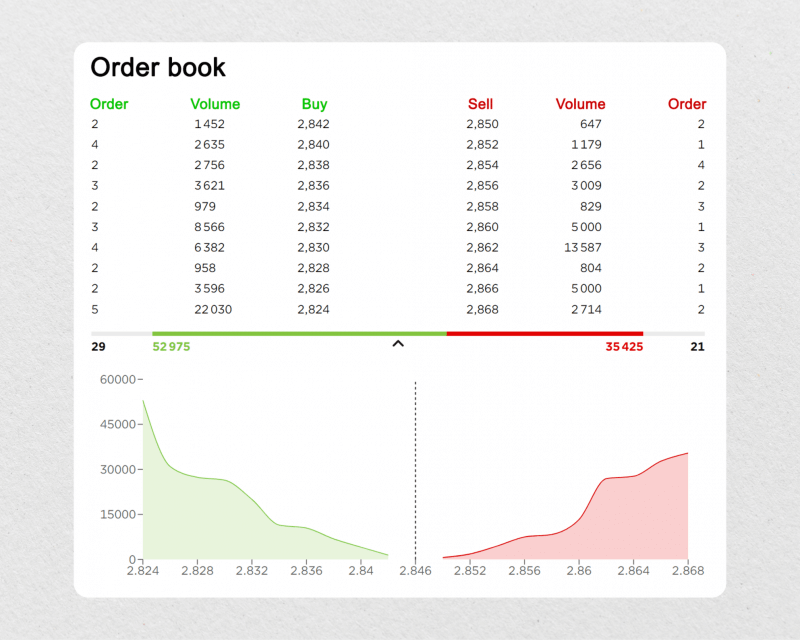
Order books are the classic backbone of traditional finance and centralized exchanges. An order book records all active buy (bid) and sell (ask) orders, ranked by price and timestamp. When compatible orders exist — e.g., a buy at $100 and a sell at $100 — the orders match and execute.
Key attributes:
Price discovery through competitive orders — traders set prices directly.
Depth and transparency — market participants can gauge liquidity at each price level.
Control & advanced trading strategies — limit orders, stop orders, iceberg orders, and algorithmic strategies thrive here.
Often better suited to institutional traders and high volume assets.
Challenges on-chain:
Native blockchain environments struggle with implementing fully on-chain order books because each change would require expensive transactions and time. Most decentralized implementations either adopt off-chain matching with on-chain settlement or use auxiliary layers to achieve similar behavior.
Best for: High liquidity markets, institutional grade trading, derivatives, and professional strategies where precision outweighs simplicity.
2. Automated Market Makers (AMMs) — Liquidity Pools + Algorithms
AMMs revolutionized DeFi by removing the need for an order book entirely. Instead, they use liquidity pools where users deposit pairs of tokens (e.g., ETH/USDC). A mathematical function — often a constant product formula (x * y = k) — automatically sets the price based on current pool reserves.
Advantages:
Continuous Liquidity: As long as there’s liquidity in the pool, anyone can trade — no need to wait for counterparty orders.
Permissionless Listing: New tokens trade instantly once a pool is funded.
Simplicity: Traders only interact via swap screens without specifying price levels.
Key trade-offs:
Price slippage: Large trades shift the pool’s balance, pushing prices away from the market rate.
Impermanent loss: Liquidity providers can lose relative value compared to HODLing.
Less precision: No limit orders or book depth visualization.
Best for: Retail traders, early markets, small cap assets, and projects needing immediate liquidity.
3. Hybrid Models — Best of Both Worlds?
Hybrid models are emerging to combine the depth and precision of order books with the continuous liquidity of AMMs. These designs often:
Use AMM pools as a liquidity backstop when order book depth is low.
Support on-chain limit orders within AMM protocols.
Incorporate off-chain order matching but settle on-chain for security.
Generate market depth from algorithmic liquidity to tighten spreads and improve execution quality.
Example approaches:
Systems that automatically convert AMM liquidity into synthetic order book depth.
Protocols that allow limit orders while maintaining an AMM pool backing them.
Off-chain matching engines linked to on-chain settlement.
Hybrid models aim to mitigate slippage and impermanent loss while maintaining accessible user experiences and continuous liquidity.
4. Trade Execution & Cost Structures
From a trader’s perspective, each model impacts execution cost differently:
Order book: Tight spreads, sophisticated orders, but may lack fill if liquidity is low.
AMM: Always executable, fee-based pricing, but potential slippage.
Hybrid: Seeks tight spreads + guaranteed execution, lowering total trading cost and improving price discovery.
Recent research into crypto market microstructure explores how block-level execution cost, MEV, and AMM concentrated liquidity behavior interacts with order book dynamics — especially under high volatility conditions.
5. Real World Use Cases
Hybrid DEXs like Injective Network blend aspects, providing better control for traders with order book familiarity while maintaining liquidity robustness.
Conclusion: Not One Size Fits All
No single model is universally superior:
Order books excel in precision and institutional standards.
AMMs democratize liquidity and power much of DeFi today.
Hybrid models are likely the future infrastructure, balancing liquidity, control, efficiency, and accessibility.
As protocols evolve, these models may converge further — incorporating predictive pricing engines, machine learning enhancements, and programmable liquidity strategies — blurring the lines and reshaping decentralized markets.