Crypto Nodeby Pranjit
Crypto Node Running | Understanding Blockchain Nodes and Their Role in Decentralization
2 min read7 January 202657 reads
What is a Crypto Node?
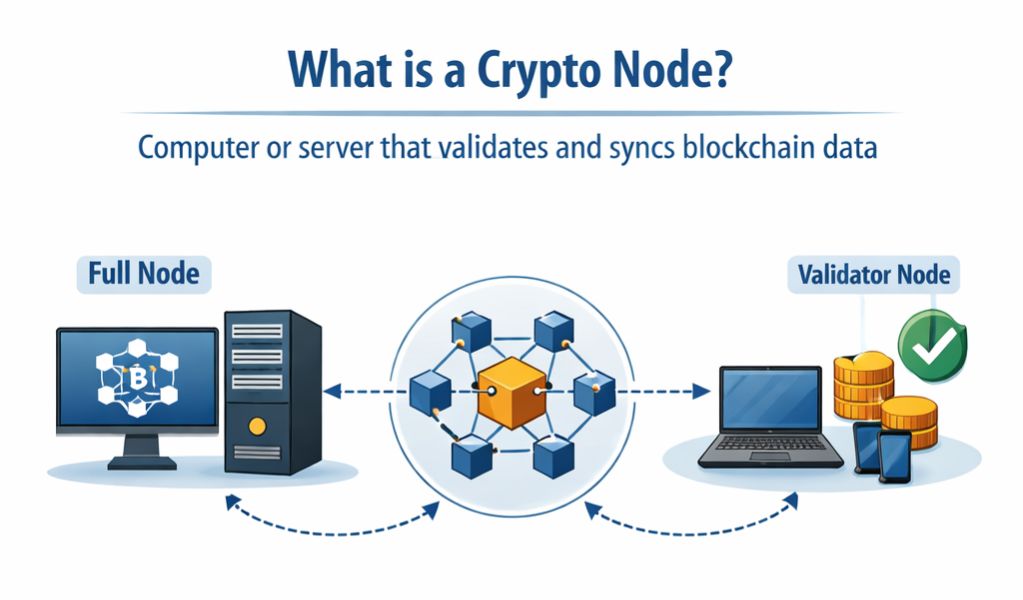
A crypto node is a computer or server that participates in a blockchain network by storing, verifying, and sharing blockchain data. Nodes communicate with each other to ensure the network remains decentralized, secure, and trustworthy.
Why Are Crypto Nodes Important?
Crypto nodes are the backbone of any blockchain network. They independently verify transactions and blocks instead of relying on a central authority. This process ensures transparency, prevents fraud, and protects the network from manipulation.
Types of Crypto Nodes
1. Full Node
A full node stores the complete blockchain history and verifies every transaction and block according to network rules. It offers the highest level of security and trust.
2. Light Node
Light nodes do not store the entire blockchain. They rely on full nodes for verification and are commonly used in mobile wallets and low-resource devices.
3. Validator Node
Validator nodes are used in Proof of Stake (PoS) blockchains. They validate blocks and earn rewards by staking tokens.
4. Archive Node
Archive nodes store all historical blockchain data, including old states, and are mainly used by developers and explorers.
How Does Crypto Node Running Work?
Running a crypto node involves installing blockchain software, syncing data with the network, and keeping the node online 24/7. The node continuously verifies transactions, propagates blocks, and follows consensus rules.
Benefits of Running a Crypto Node
Supports decentralization and network security
Improves trustless verification
Earn rewards (in validator or incentive-based networks)
Helps developers and researchers
Provides independence from third-party services

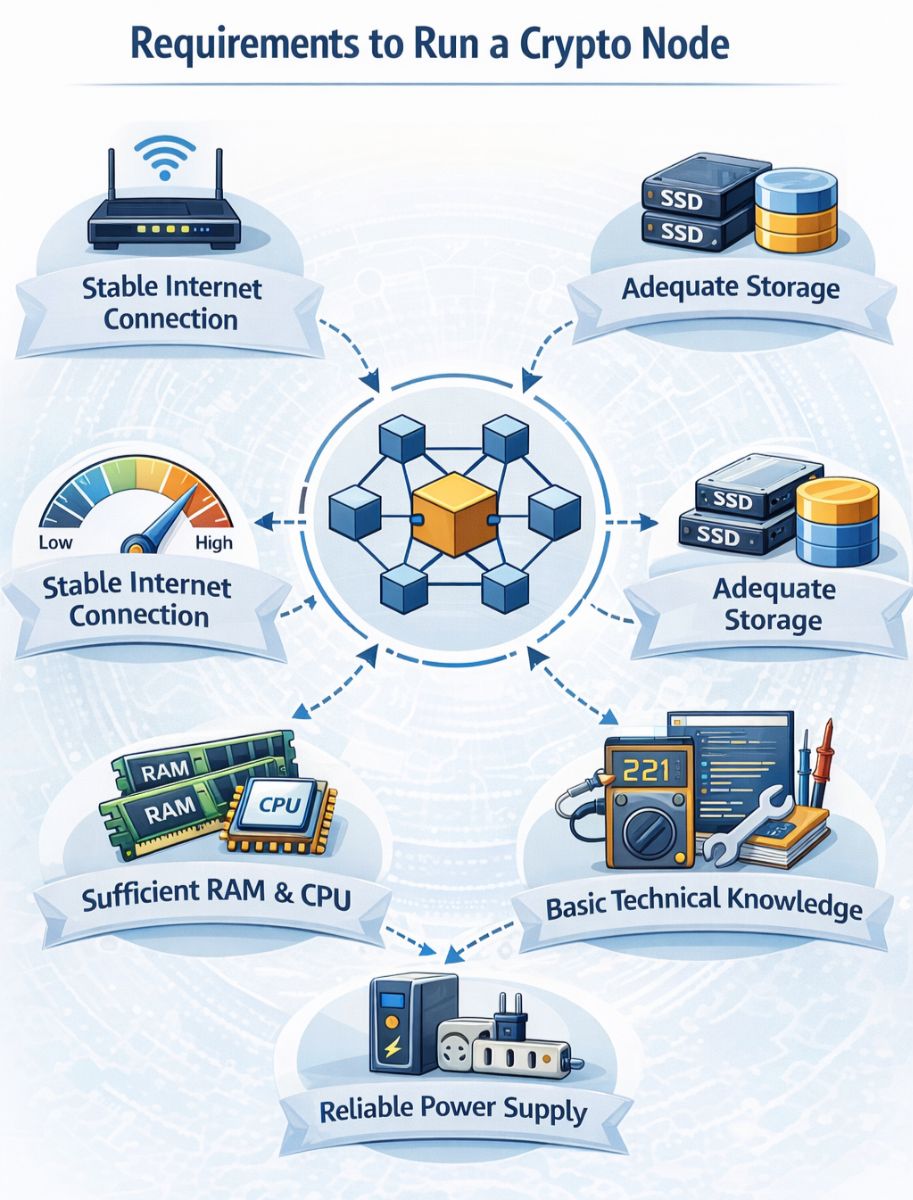
Requirements to Run a Crypto Node
Stable internet connection
Adequate storage (SSD recommended)
Sufficient RAM and CPU
Basic technical knowledge
Reliable power supply
Future of Crypto Node Running
As blockchain adoption grows, node infrastructure will become even more important. With innovations like light clients, cloud nodes, and incentivized networks, running nodes is becoming more accessible to everyday users.
Conclusion
Running a crypto node is a crucial contribution to blockchain decentralization and security. Whether for learning, supporting a network, or earning rewards, crypto node running plays a vital role in the future of Web3.