Tradingby Rajesh
Become Profitable trader
3 min read13 January 202635 reads
How to become profitable trader
To succeed in crypto trading in 2026, you must realize that the market is no longer just about "picking the right coin." It is a psychological battle against yourself. Success is found where strategy meets emotional control.
Here is your comprehensive guide to mastering the mental and tactical sides of trading.
1. The Enemy Within: Managing Emotions
In the 2026 market, volatility is still high, but institutional presence has made price moves more "surgical." Your emotions are your biggest liability.
Fear of Missing Out (FOMO): This is the urge to buy when you see a green candle shooting up. The Rule: If the move has already happened, you are too late. Wait for the "retest" or the next opportunity.
Fear, Uncertainty, and Doubt (FUD): Panic-selling during a 10% dip often happens right before a recovery.
Revenge Trading: After a loss, the impulse to "win it back" immediately leads to over-leveraging and total account liquidation.
2. The Silent Killer: Greed
Greed is what turns a 50% profit into a 20% loss. It whispers that the price will "keep going up forever."
The "Exit" Problem: Most beginners know how to buy, but few know how to sell. Greed prevents you from clicking the "Sell" button at your target.
The Solution: Scaled Exits. Instead of trying to time the absolute top, sell 25% of your position at pre-set intervals. This locks in gains while letting a "moonbag" run.
Leverage Warning: Greed often leads beginners to use 20x or 50x leverage. In 2026, market "wicks" are designed to hunt high-leverage positions. Keep your leverage under 3x—or avoid it entirely until you are profitable on "Spot."
3. The Foundation: Iron Discipline
Discipline is the bridge between a plan and a profit. Without it, you are just gambling.
The Trading Journal: Every successful trader in 2026 keeps a log. Write down: Why did I enter? What was my emotion? Did I follow my stop-loss? If you can't measure it, you can't improve it.
Routine over Hype: Stop checking prices every 5 minutes. Set alerts on apps like TradingView or CoinMarketCap. Discipline means only trading when your specific "setup" appears.
The 1% Rule: Never risk more than 1% of your total account balance on a single trade. This ensures that even a string of 10 losses won't end your career.
4. Building a Professional Strategy
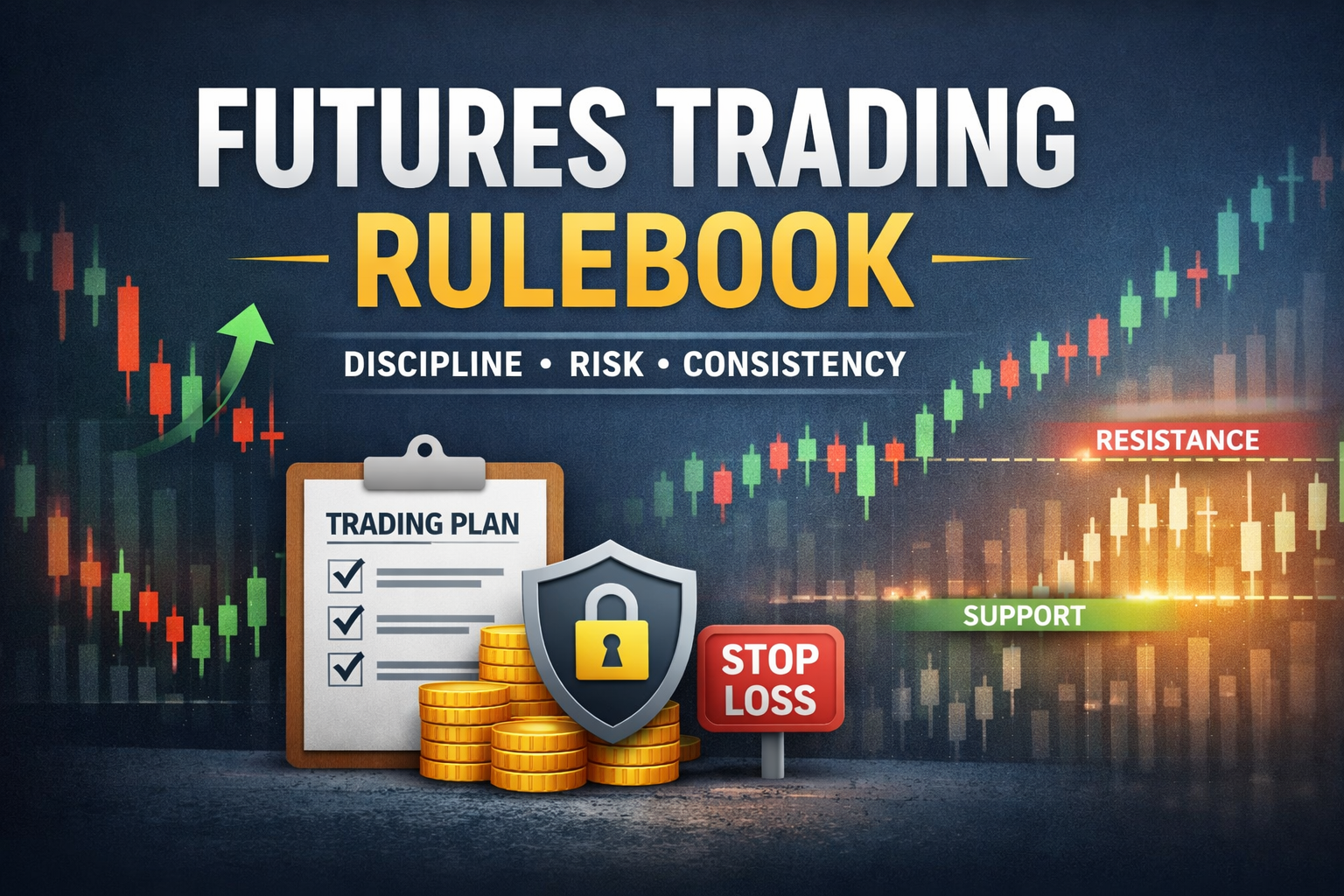
A strategy is your "rulebook" that removes the need for thinking during high-stress moments.
5. Key Success Factors for 2026
Regulatory Awareness: Success now requires knowing which assets are "compliant." Trading "ghost" tokens on unregulated DEXs is a high-risk gamble.
Risk Management is #1: Your first goal isn't to make money; it's to not lose your capital. If you stay in the game, the money will eventually come.
Patience: The market pays the patient person with the money of the impatient person. Sometimes, the best trade is no trade at all.
Pro Tip: Treat trading like a business, not a hobby. A hobby costs you money; a business makes you money.
Components of a Winning Strategy:
Technical Analysis (TA) Using charts to find entry and exit points (Support/Resistance).
Fundamental Analysis (FA) Checking the project’s health, team, and 2026 utility.
Stop-Loss (SL) An automatic order to sell if the price drops to a certain level. Mandatory.
Take-Profit (TP) An automatic order to sell once your goal is reached.