Cryptoby Adarsh Pal
What Is Mining in Cryptocurrency?
3 min read7 January 202640 reads
Written by

1 follower
What Is Mining in Cryptocurrency?
Cryptocurrency mining refers to one of the most significant processes associated with blockchain technology. The process entails the system responsible for making sure these decentralized platforms are secure and a means through which transactions are verified, and new units of the coin are created. Without this process, the existence of cryptocurrencies, such as Bitcoin, would not be possible, as they would not be able to operate without banks or a central authority.
While the word “mining” may have a technology-friendly ring to it, the concept itself is quite simple: a computer race takes place between a series of complex mathematical challenges, with winners rewarded with cryptocurrency.
How Cryptocurrency Mining Works
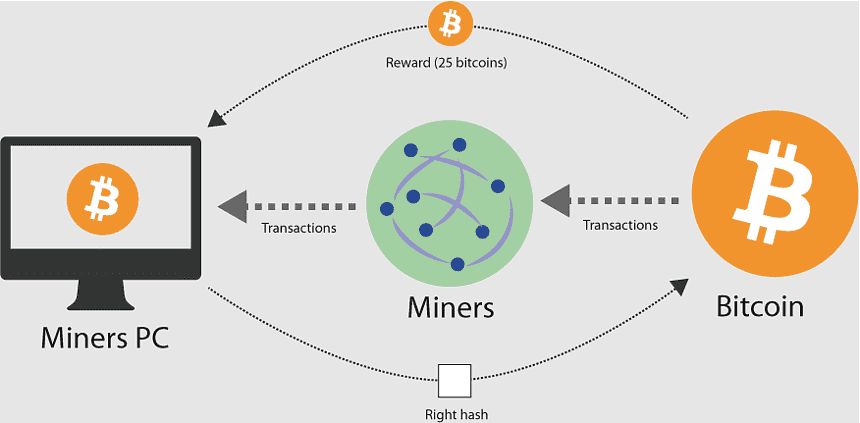
When someone sends cryptocurrency, the transaction is broadcast to the network. Miners collect multiple transactions and group them into a block. Their computers then compete to solve a cryptographic puzzle.
The first miner to solve the puzzle confirms the block and adds it to the blockchain. In return, the miner receives a block reward and transaction fees. This system is known as Proof of Work (PoW).
Because solving these puzzles requires massive computing power, altering past transactions becomes extremely difficult, protecting the network from fraud and manipulation.
Why Mining Is Essential to Blockchain
There are three main roles which mining plays within a cryptocurrency system.
Firstly, it authenticates the transaction and eliminates the problem of doube-spent money. Secondly, the system secures the Bitcoin network by ensuring that any attack is costly. Thirdly, the system controls the issuance of new money through predetermined algorithms inscribed on the blockchain.
These functions enable cryptocurrencies to run in a manner that has no centralized control.
Different Types of Crypto Mining
Mining can be performed using various types of hardware depending on the network and budget.
CPU mining uses standard computer processors but is largely outdated due to low efficiency.
GPU mining uses graphics cards and offers better performance for many altcoins.
ASIC mining uses specialized machines designed specifically for mining and dominates Bitcoin mining today.
Cloud mining allows users to rent mining power instead of owning equipment, although it carries higher risk.
Hash Rate and Mining Difficulty Explained
The hash rate measures how many calculations a miner can perform per second. A higher hash rate increases the chance of earning rewards.
Mining difficulty adjusts automatically based on how much computing power is on the network. As more miners join, difficulty increases to keep block production stable.
Mining Rewards and Profitability
Miners earn income from block rewards and transaction fees. However, profitability depends on several factors including electricity costs, hardware efficiency, network competition, and cryptocurrency prices.
As mining becomes more competitive, large-scale operations with low energy costs gain a significant advantage over small home miners.
Environmental Impact and Sustainability
Crypto mining is seriously electricity-consuming, which raises environmental concerns. A lot of mining companies have taken the lead and invested in renewable energy and energy-efficient infrastructure. Some blockchains have also moved away from mining to other consensus models.
Proof of Work vs Proof of Stake
All cryptocurrencies are not mined. There is Proof of Stake (PoS), where the validation for the cryptocurrency is done by staking the coins instead of using computational power, thereby consuming less energy.
The Proof of Stake consensus algorithm replaced the Proof of Work consensus mechanism that was mainly used by Ethereum. This major change occurred in 2022.
Is Crypto Mining Still Worth It?
Even then, there can be a profit in mining, but it has to be carefully planned for, invested in, and managed. Volatility in markets as well as changes in government policies can greatly affect it.
For most people, purchasing and then holding a cryptocurrency or even staking may be a more convenient option.
Risks to Consider
Crypto mining comes along with a number of risks, such as high initial investment costs, uncertain energy prices, fast hardware deterioration, regulatory uncertainty, and risks of frauds-very particular in cloud mining services.
Conclusion
Cryptocurrency mining is an integral part of ensuring the functionality of blockchain technology and a trust aspect within a decentralized system. Despite advancements in technology and sustainability efforts, mining can be considered an essential part of the digital asset space.
An understanding of mining explains to investors and enthusiasts better the value of blockchain ecosystems.
In next article you will understand "Psychology of Crypto Investors".
Stay tuned !!