gas feesby Shahid Kamran
Gas Fees Explained for Crypto Traders: Why Your Trades Cost More at Certain Times
4 min read8 January 202644 reads
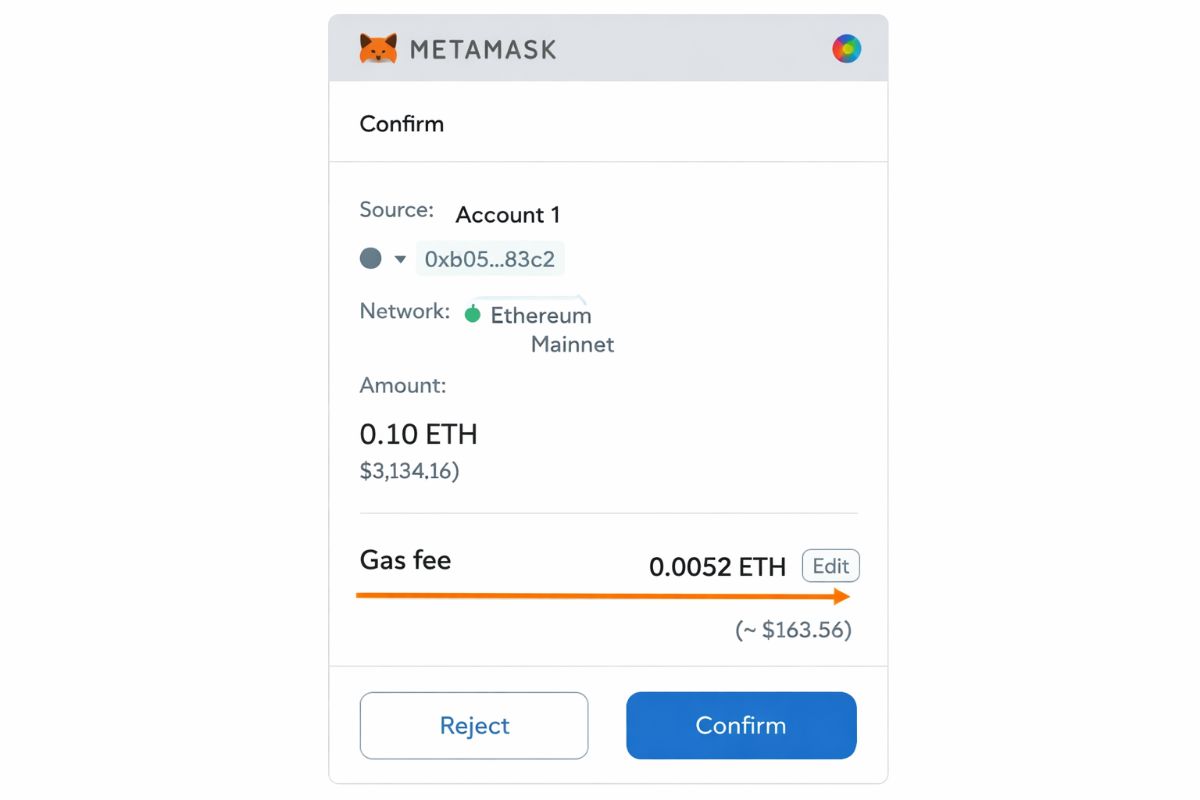
If you have ever sent crypto from one wallet to another or traded on a decentralized exchange (DEX) like Uniswap, you have seen gas or network fees being charged. Sometimes this fee is small, and sometimes it suddenly becomes very high, which can be confusing and annoying. Understanding gas fees helps you choose the right time and method to trade so you keep more of your profits.
What Are Gas Fees?
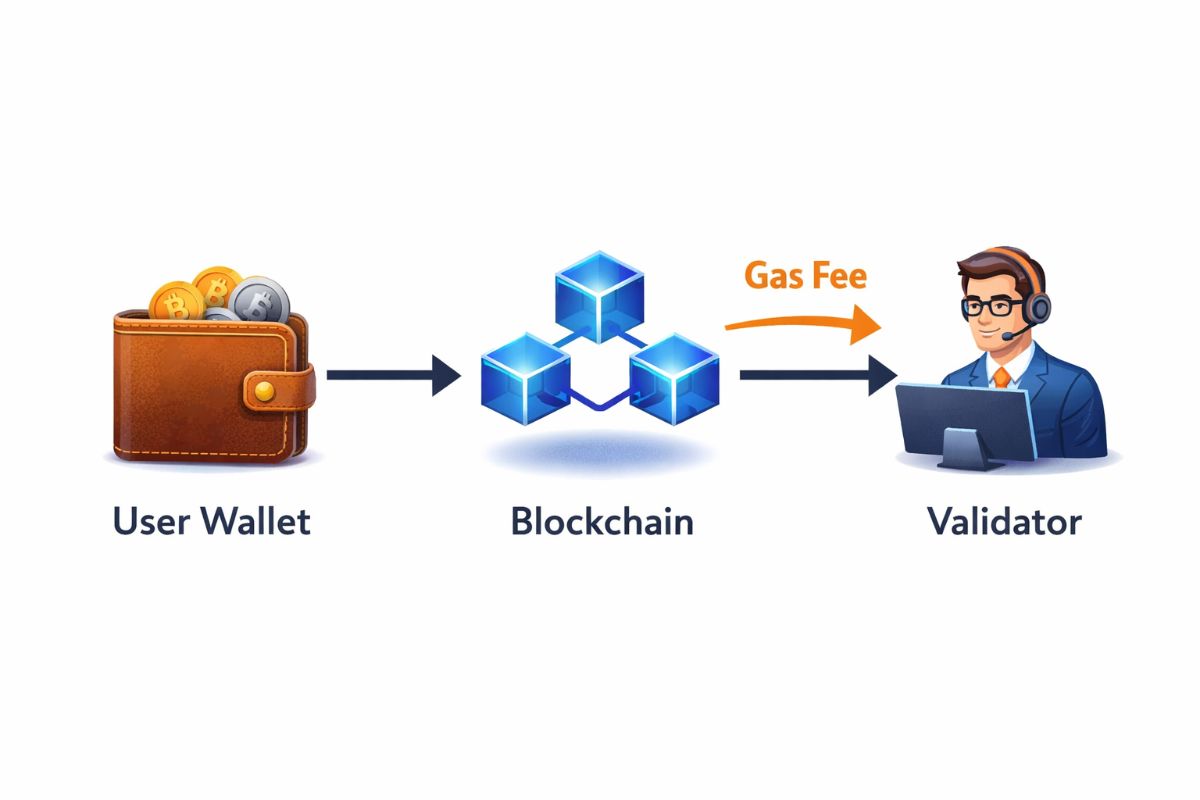
Gas fees are payments you make to the blockchain network to process and confirm your transaction. These fees go to validators or miners as a reward for including your transaction in a block and securing the network.
A simple way to understand this:
- Think of a blockchain like a busy highway
- Your transaction is a car that wants to enter the highway
- Gas fees are like the toll you pay to use the road
What Decides How Much Gas You Pay?
The final gas fee you pay depends mainly on three things:
1. Network Demand (How Busy the Chain Is)
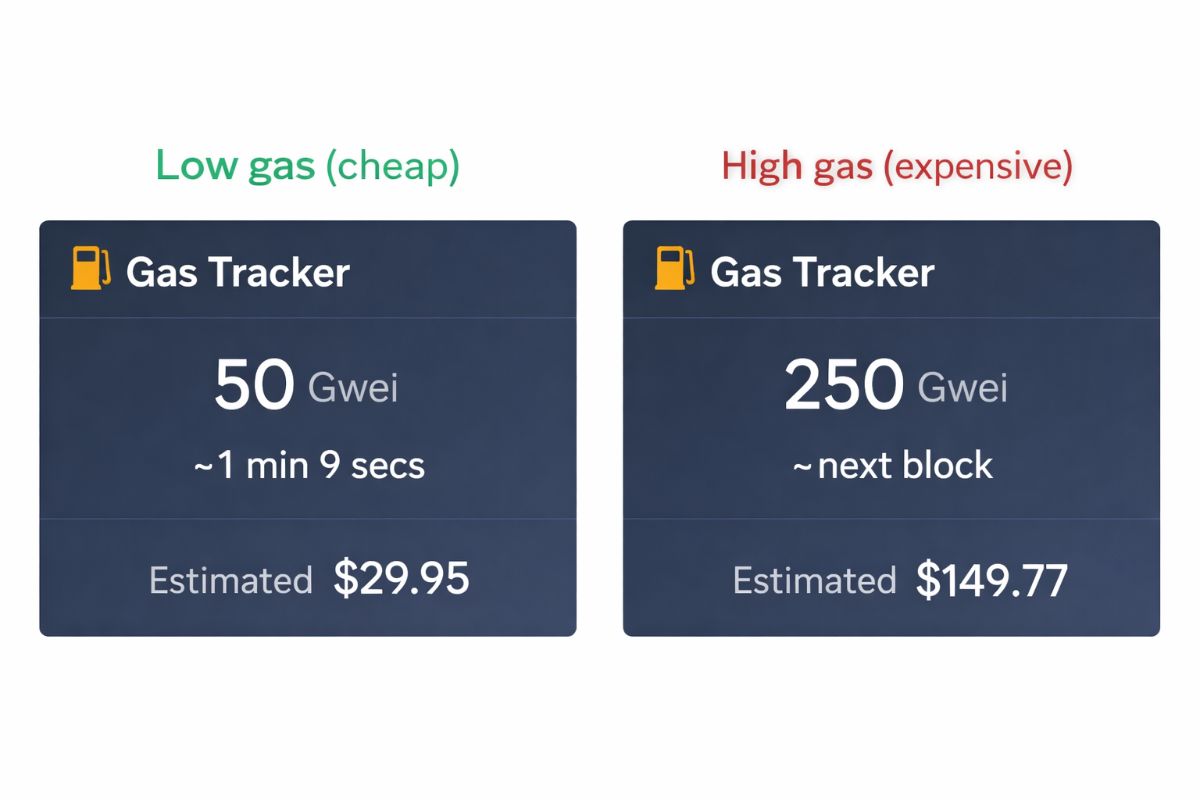
When many people are sending transactions at the same time, the network is congested. To get their transactions confirmed faster, users offer higher gas prices, creating a bidding war for block space.
2. Transaction Complexity (What You Are Doing)
A simple wallet-to-wallet transfer uses little computation, so it needs less gas. Actions like swapping tokens on a DEX, providing liquidity, or interacting with complex DeFi contracts use more computation and therefore cost more gas.
3. Gas Price You Choose (How Much Per Unit)
On networks like Ethereum, you set how much you are willing to pay per unit of gas. If you choose a higher gas price, your transaction is usually confirmed faster. If you choose a lower price, it may be slower or even get stuck when the network is very busy.
When Do Gas Fees Spike?
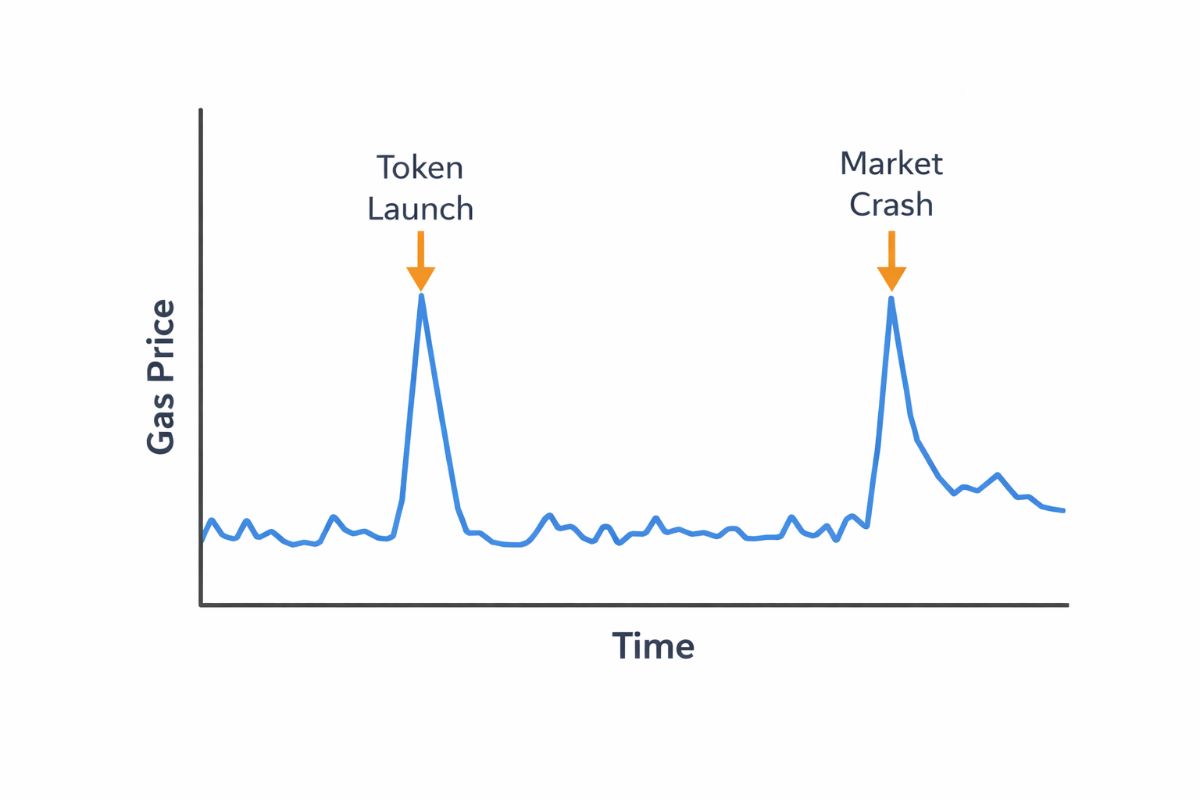
Gas fees often jump during specific events or time periods because many people are trying to use the network at once.
Common situations where gas fees become very high:
- Popular token launches or airdrops (everyone trying to buy or claim at the same time)
- Major DeFi protocol events, like new features, farming programs, or incentive launches
- Market crashes or big pumps, when traders panic sell or FOMO buy, creating huge transaction volume
- Peak trading hours and weekends, when more users are active
- Network upgrades or important news related to a specific chain
How to Reduce Your Gas Costs
Gas fees are a real cost of trading, but you can manage them with a few practical strategies.
1. Time Your Transactions
Use gas tracker tools like Etherscan Gas Tracker for Ethereum to see live gas prices. Try to send transactions during low-activity hours, such as early mornings, late nights, or quieter weekdays for your main user region.
2. Use Layer 2 (L2) Networks
Layer 2 networks like Arbitrum, Polygon, and Optimism handle transactions off the main Ethereum chain and then settle them back, which makes them much cheaper and faster. If your tokens and dApps are available on L2, doing your swaps and transfers there can cut your gas cost by a large amount.
3. Batch or Plan Your Transactions
Instead of making many small transfers, try to combine actions when possible. For example, move a larger amount once instead of making several small moves. This way, a single gas fee covers more value, improving your overall cost per unit of crypto moved.
4. Choose a Cheaper Network When Possible
If you are not forced to use Ethereum, you can compare fees on other chains like Solana or BNB Smart Chain, which often have lower fees. For simple transfers or smaller trades, using a low-fee chain can be more efficient than paying high Ethereum gas.
5. Simplify What You Do On-Chain
Simple transfers cost less than complex smart contract calls. Avoid unnecessary contract interactions, repeated swaps, or over-complicated DeFi strategies when gas is high.
Final Takeaway for Traders:
Gas fees are the invisible cost of trading and moving crypto, but they are not random. They are driven by network demand, transaction complexity, and the gas price you choose. They can be managed with timing, L2s, batching, and smart network selection. Over time, small optimizations on gas can add up to significant savings, especially if you are an active trader.